Translate

Showing posts with label belly dancer. Show all posts

Friday, June 3, 2016

What takes more Time? Creating or Marketing? When is Enough Enough?

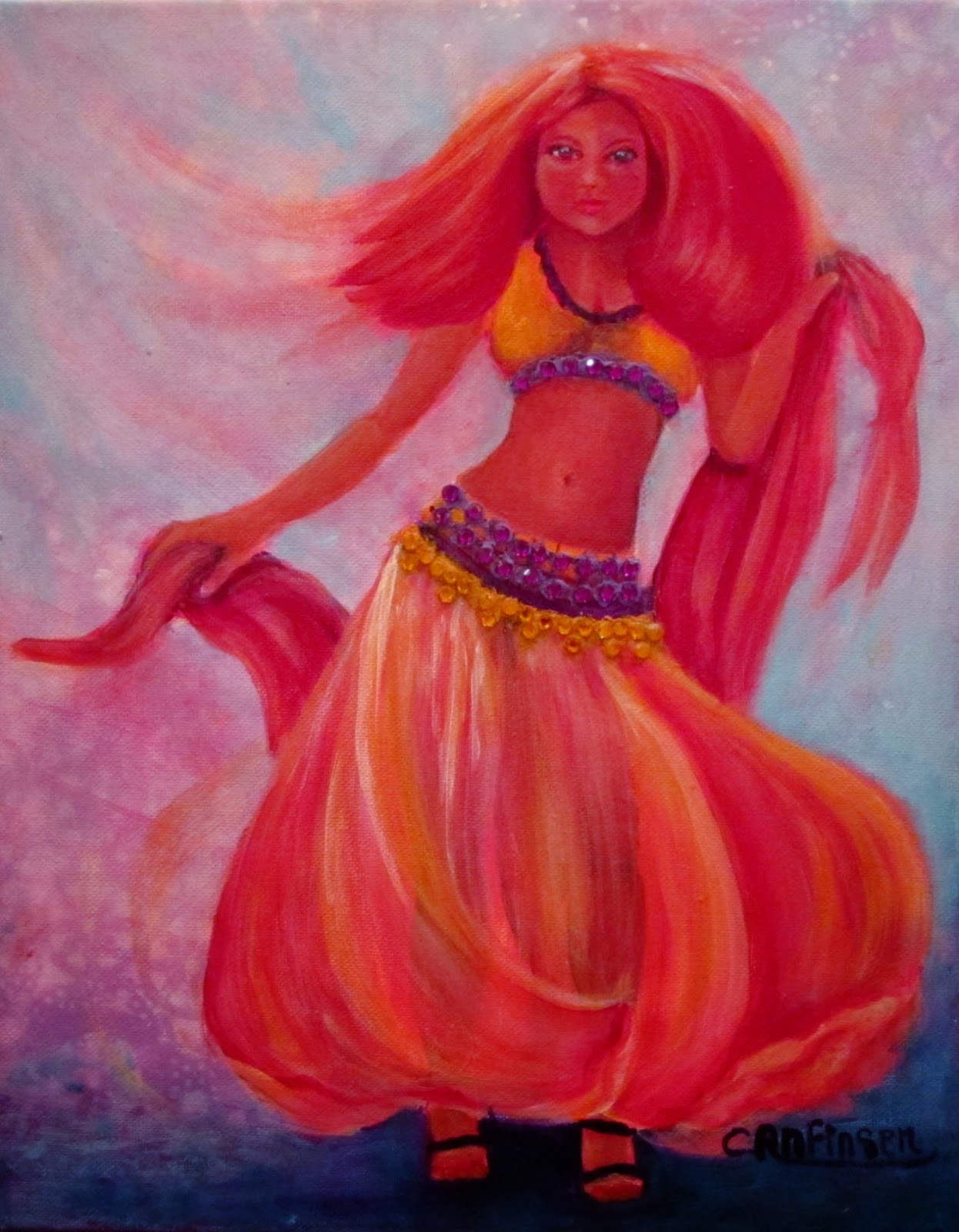
"Belly Dancer" 11 x 14 acrylic on panel with beads
According to the experts, if you’re doing your job, you spend more time on marketing and social networking than actual creating. No wonder I’m always behind! Add to that computer problems, maintenance, inventory and you’ve set yourself up for failure.

But somehow it all comes out in the wash. You do what you have to do when you must. There’s no other way and little other choice. You keep plugging along finding ways to progress, to get attention, and to make connections.

I must admit networking has never been my strong suit. Grinding away hour after hour on social networks or advertising sites is not fun, at least for me. I find the payback is small and somewhat unmeasurable. If you decide to go all out, the costs may exceed your current income.
"Reggae Night" 18 x 24 acrylic on canvas
I know, “you have to spend money in order to make money,” (or so they say); but there is a limit. Eventually, financial reality rears its ugly head and demands its due. At some point, you have to pay the piper.

There are more people out of work than the government is willing to admit. I swear they fudge the numbers. Each week they come up with something and then revise it a few days later while no one’s watching. Our southern borders are so holey that most of the low-end jobs are taken by illegal aliens.
    
Those jobs used to be filled by college kids trying to earn tuition. Unable to find work, they are forced into borrowing money from the government. My own children are still paying on outstanding loans even though they’ve been out of school for more than 10 years.

We can’t keep bailing out the world’s people and its children. We are near twenty trillion in debt, and yet we offer protection, food, clothes, and goodies to everyone with a hand out, no matter where they are or where they come from. This endless train of money is a dream that will collapse. It is inevitable.
"Broken" 11 x 14 mixed media on canvas
I’ve always stressed doing whatever it takes to get ahead and be successful, but there comes a point when common sense must force you to ask the needed questions:
  • Who is paying for this free-load of stuff?
  • Where does the money come from?
  • What will it cost you long-term?
  • When the gravy train runs out, what then?
  • If the government controls everything, how long before freedom goes?
  • What has happened to other Socialist Countries over time?
  • Wouldn’t you rather have a good job than no job at all?
  • If the government takes most of your salary, what else can they take?
  • When are you going to say enough is enough?

"Teach a man to Fish . . ." (Old Chinese Proverb)
"Fish Market" 24 x 18 acrylic on canvas

Friday, May 1, 2015

It’s All About Space

(The wide open spaces of the West -- original photo)
Space – there’s so much of it! We want to explore it, name it, and conquer it. Our curiosity knows no bounds when it comes to defining, understanding and controlling our vast universe.

Personal space makes us feel comfortable and safe. If someone invades that area or gets too close, we pull away. Space helps define the parameters we use in dealing with other people. We use different constraints with family members than we do with friends. The restrictions widen when we deal with strangers or other people socially or in a business setting.

In a crowded room or a queue of people, we may feel confined, but we deal with it. There are checks and balances constantly at play as we learn what is acceptable or tolerable. Sometimes there are no choices like on a crowded bus or waiting in line at the theater. This is when restraint and caution must help us counterbalance the situation.

"Fish Market" mixed media on canvas
Artists must control the space on their canvas and define its boundaries. Space can enhance distance and size, and help to explain shapes, objects and lines. To illustrate this point, a simple drawing of a tree is much easier to define when you focus on the space between the branches and in the background, not on the shapes in the foreground. The detail and the busyness can clutter your mind and vision. When you focus on the large and simple spaces and objects, clarity comes at once. Details should always come later.

Shadows may be defined, by analyzing the patterns of light on the ground. These shapes usually consist of circles or oval shapes between the leafy branches that are cast by the sunlight. Elongated shadows become shapes unto themselves as do the light spaces between them and surrounding them.

"Belly Dancer" 11x14 acrylic on canvas (with jewels)
When I created the “Belly Dancer’ I wanted her hair and costume to create movement. In order to achieve this, her hair had to move in the same direction as her hips, and her skirt had to swing in the opposite direction. Faded, extended color from both gives the feeling of motion. The space between her arms and around her body help to define that movement.

When my children were taking piano lessons, their teacher taught them about phrasing. Phrasing is like taking a breath between sentences or musical phrases. Phrasing helps to define the music in much the same way that space defines a painting.

Once your center of interest has been chosen, everything within the painting must draw the eyes to that point. The space on your canvas may also help you control eye movement. The adage “All roads lead to Rome” applies to the spaces, shapes and values of color on your map or canvas. “All roads lead to the center of interest.” If they do not, something is wrong with your composition.

(Belly Dancer - work-in-progress)
Gauge how your eyes travel and what they are drawn to. Too many colors and lines, or too much light may scatter your vision and allow your eyes to fly off the canvas. Fix it! There must be no distractions. Your composition must hold together and have continuity of purpose and direction.

White space on a page allows the reader’s eyes to breath or rest. In a painting, at some point, the viewer’s eyes must rest on the center of interest. That rest gives him or her pleasure, and keeps them from getting bored or wandering off to another painting that may better hold their interest.

A highway divides the "Great Salt Lake"