Translate

Showing posts with label Alaska. Show all posts

Wednesday, February 11, 2015

Photographs and Sketches May Refresh Your Last Great Idea!

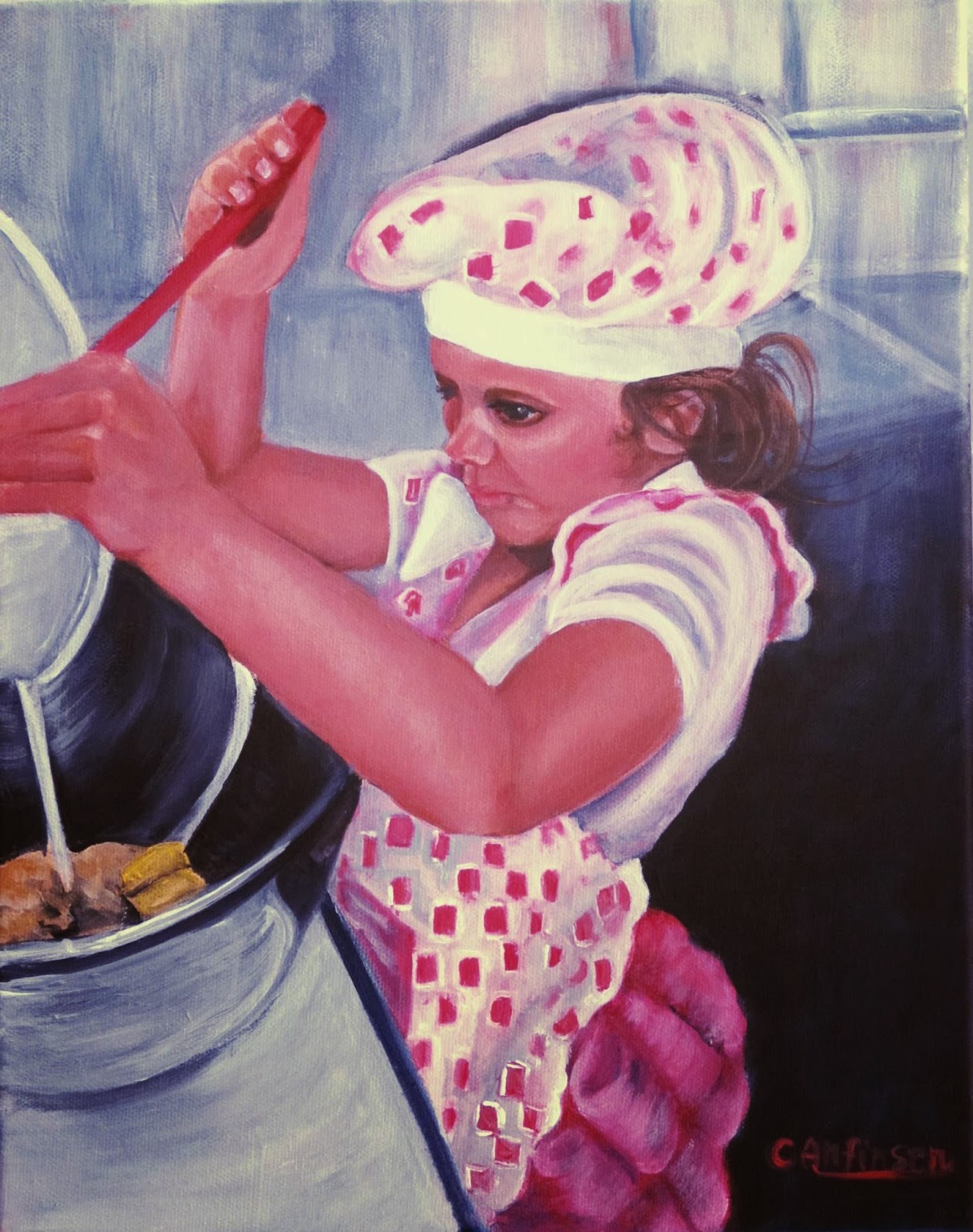
"The Cook" 11x14 acrylic on canvas
I delight in painting children. There is such a freshness and openness in their faces. No masks to hide emotion. No walls to put distance between them and us. Their innocence invites us to experience life anew as we once did when we were children.

My latest painting took me much longer to complete because of health issues. I didn’t want to clutter the background with details that would take the viewer’s eyes away from the center of interest. Don’t get me wrong, I’m a fan of “busy” paintings. I like to spend time wandering through a scene and taking it all in. Restaurants, unusual rooms, people involved in talking or working are some of my favorites.
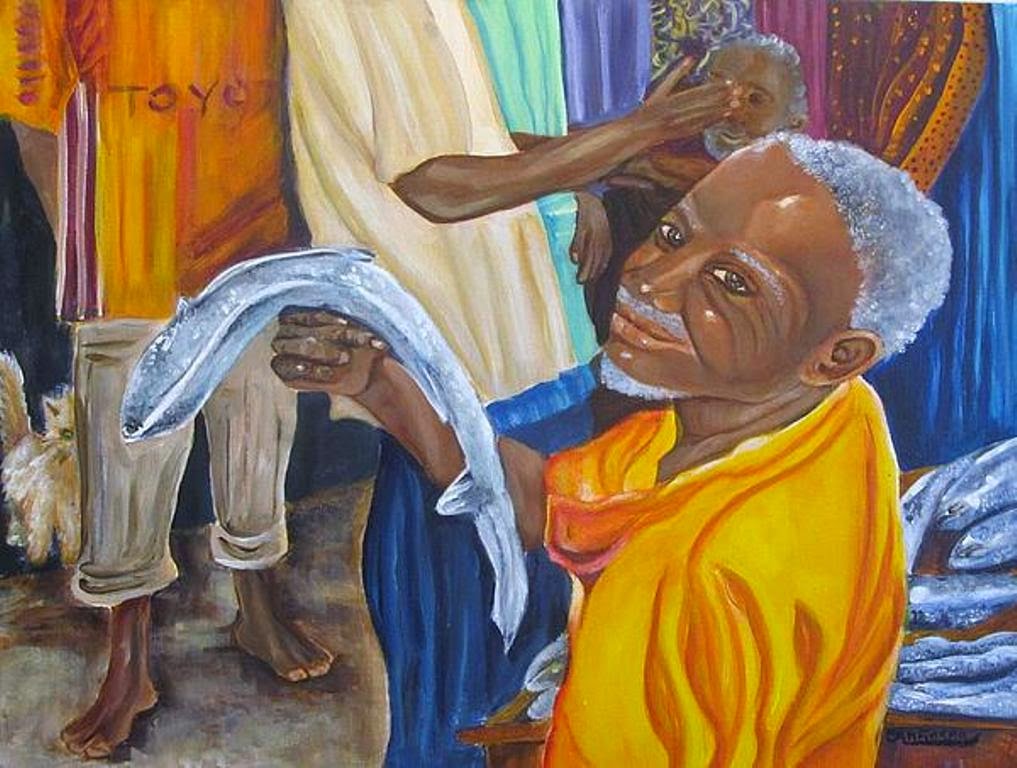
"Fish Market" acrylic on canvas
(When I did this painting, an artist friend scolded me for putting in too much detail -- I ignored her. The
painting did get in a juried gallery so I was pleased!)
But there are times when the main event can get lost in too much detail. One of my favorite artists is K. Henderson who knows how to use detail to her advantage. She works in oils but also uses watercolor and illustrates a journal that she shares with others.

Kay is a naturalist, artist and photographer. She travels extensively to areas such as Alaska, and as far away as Manitoba, CAN.  Her dialogue and her web site are well worth checking out if you aren’t familiar with her body of work.

Here is a link to her Indian portraits: http://khendersonart2.blogspot.com/  

This painting is another good example of an innocent child surrounded by the detail I love to paint.
"An Open Book" mixed media. Prints available.
I do a lot of photography in making painting and composition decisions. I file them away and review them when I'm looking for a certain detail or subject. Photographs can preserve memory. When you add it to a quick color sketch the scene you captured days or weeks before can quickly come to mind.
(the first slap of paint on canvas)
(I was going to reflect a beater but changed my mind)


Saturday, March 9, 2013

Healing the World through Natural Remedies and Cooperation


"Cafe Costa Rica" 20 x 20 acrylic on canvas
I’m having a cup of chamomile tea while I work. It’s supposed to be good for your immune system. I’m staying away from caffeine as I’m having digestive problems. I added a sprinkle of ginger to cut the sweetness of the flowery tea. Ginger is another digestive wonder. How do I know? I studied herbs and medicinal flowers using my favorite Public Library.

Before manufacturers got in the business of making drugs, people always used natural remedies in healing. I’ve used some of them myself: garlic for earaches and croup, dill seed tea for diarrhea and stomach ache, etc. Depending on how costly medicines and care becomes in the future, we may all need to learn about the natural healing properties of plants and seeds.


"Work-in-Progress" of Cafe Costa Rica
In the sixties, people were flocking to communes to share in "the love" and in the expenses like housing and food. Some of these groups were successful, and some of them ended up in bickering and violence.

Some people were attracted to the communes for a “free ride.” When they discovered they had to pull their fair share, bitter complaints and disagreements boiled to the surface.

Some of these “swarms” were brought together under the guise of religion, but instead of being anchored in truth, they were nothing more than mind control cults that preyed on the gullible.

I read about some of the early communes. I myself had longed to go to Alaska, the last frontier. Some of my favorite books tracked the early exploration and settlement of this spectacular land. The early settlers learned much from their Eskimo and Native American counterparts who shared their methods of gathering and storing food.


Additional knowledge was learned through experience and through bouts of hunger and starvation. Communes learned quickly that If you didn’t catch it, kill it or store it – you didn’t eat. People worked together building cabins, and bartering for food and game. 

An Indian mother showed a new resident how to put moss on her baby’s bottom to soak up the urine. Moss’s softness and drawing properties kept the infant’s skin smooth and free from chafing and rash.

Foods that the newcomers had never eaten were cultivated and harvested under the guidance of the natives. Using Alaska’s almost limitless supply of plant foods, fish and game made survivors out of them. A tough, hardy people, they faced unknown terror and starvation in order to carve out a new life in this wild frontier.


(Inspiration for the following painting: "Americana")
Could you survive if all the grocery stores were suddenly empty? What would happen if supplies were interrupted by terrorists or traitors? Would you know how to forage for food; what to eat and what not to eat in the wilds of your own back yard? If money was scarce and food lines were long, would you know how to plant a garden and feed your family or yourself?

Thanks to my parents and grandparents, I learned how to sow and to reap. Following in my mother’s footsteps, I canned tomatoes, green beans, applesauce, peaches and pears. When the produce was available, we pickled beets and cucumbers; cherries, apricots and raspberries. We made jams and jellies to spread on our homemade bread through the winter.


"Americana" mixed media on canvas
My father, a fly fisherman, caught fresh trout: rainbow and German brown that my mother froze for the winter months. We always had food on our table even when times were lean. 

If you are incapable of living in a world without electricity or technology, talk to someone who is. Prepare yourself, if necessary, for an uncertain future.