Translate

Showing posts with label fish. Show all posts

Friday, June 3, 2016

What takes more Time? Creating or Marketing? When is Enough Enough?

"Belly Dancer" 11 x 14 acrylic on panel with beads
According to the experts, if you’re doing your job, you spend more time on marketing and social networking than actual creating. No wonder I’m always behind! Add to that computer problems, maintenance, inventory and you’ve set yourself up for failure.

But somehow it all comes out in the wash. You do what you have to do when you must. There’s no other way and little other choice. You keep plugging along finding ways to progress, to get attention, and to make connections.

I must admit networking has never been my strong suit. Grinding away hour after hour on social networks or advertising sites is not fun, at least for me. I find the payback is small and somewhat unmeasurable. If you decide to go all out, the costs may exceed your current income.
"Reggae Night" 18 x 24 acrylic on canvas
I know, “you have to spend money in order to make money,” (or so they say); but there is a limit. Eventually, financial reality rears its ugly head and demands its due. At some point, you have to pay the piper.

There are more people out of work than the government is willing to admit. I swear they fudge the numbers. Each week they come up with something and then revise it a few days later while no one’s watching. Our southern borders are so holey that most of the low-end jobs are taken by illegal aliens.
    
Those jobs used to be filled by college kids trying to earn tuition. Unable to find work, they are forced into borrowing money from the government. My own children are still paying on outstanding loans even though they’ve been out of school for more than 10 years.

We can’t keep bailing out the world’s people and its children. We are near twenty trillion in debt, and yet we offer protection, food, clothes, and goodies to everyone with a hand out, no matter where they are or where they come from. This endless train of money is a dream that will collapse. It is inevitable.
"Broken" 11 x 14 mixed media on canvas
I’ve always stressed doing whatever it takes to get ahead and be successful, but there comes a point when common sense must force you to ask the needed questions:
  • Who is paying for this free-load of stuff?
  • Where does the money come from?
  • What will it cost you long-term?
  • When the gravy train runs out, what then?
  • If the government controls everything, how long before freedom goes?
  • What has happened to other Socialist Countries over time?
  • Wouldn’t you rather have a good job than no job at all?
  • If the government takes most of your salary, what else can they take?
  • When are you going to say enough is enough?

"Teach a man to Fish . . ." (Old Chinese Proverb)
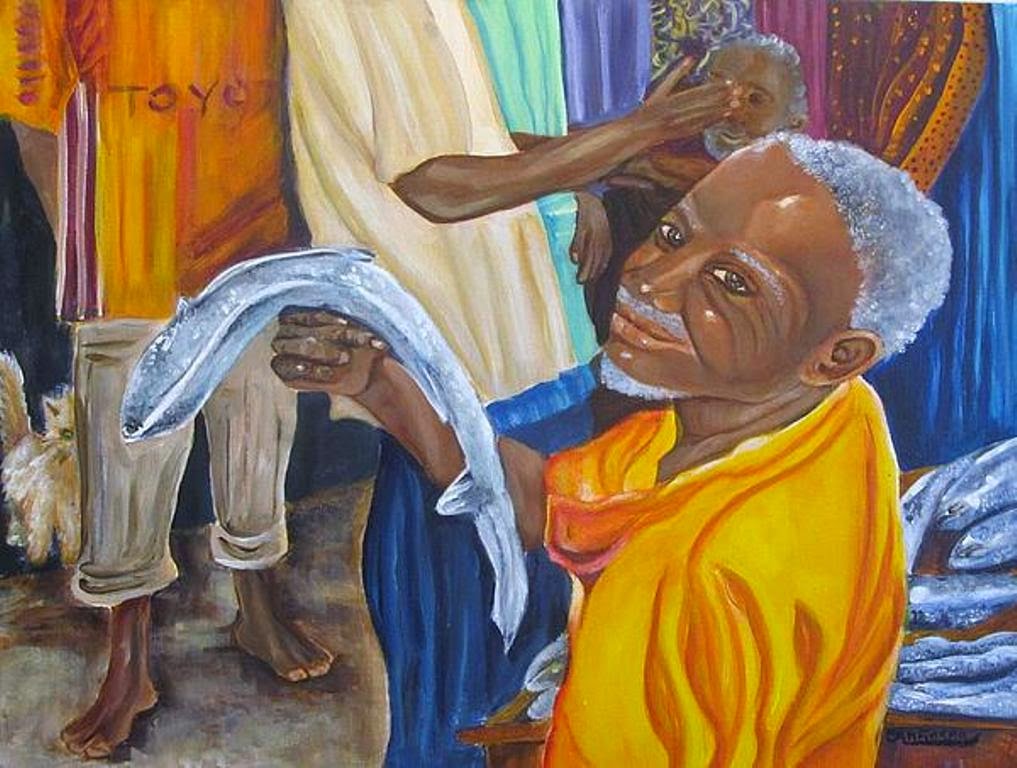
"Fish Market" 24 x 18 acrylic on canvas

Monday, June 15, 2015

R and R Time is Food for the Soul in a Busy World

(Outside Paulsbo, WA)
We made it to SeaTac Airport in beautiful Seattle, Washington on Thursday, June 11. The mid 70 temps brought a smile to our faces and a car waiting for us at the airport brought us the second. Our driver was originally an immigrant from (sounded like Malovia -- near Russia) and spoke excellent English. We shared stories and experiences as he drove us to my daughter’s house. Along the way, we enjoyed the many flowers and trees that were in bloom, many I couldn’t identify.

We got off to a great start except for some concern that one of the grandchildren was having some day-long dental work and her pulse rate had plunged to 20. The next day they had to call 911 and apply CPR. She was in the ICU for three days. The diagnosis was pericardia. She had fluid in the cardium sac around the heart. Apparently some damage was done while doing CPR. Pretty scary ordeal!

The first day I was here adjusting to our new “digs,” I took a bad fall. The living room at my daughter’s house is sunken. The wood of the hallway blended in with the wood on the living room floor, and I failed to remember the step; fell hard flat on my face. I was lucky that I only got a fat lip and a bruised elbow out of it.
(Me and my Fat Lip)
The next day we drove to a small Norwegian village called Paulsbo. Nestled within the tall cedar and fir trees were small shops, art galleries, and bakeries. We browsed, made a few purchases, and then headed to lunch for some tasty fish and chips and poached salmon sandwiches. Yum!

People naturally stared at my odd looking mouth. When they did, I said “Yeah, he beats me.” They’d look shocked and then laugh which gave me an opportunity to tell what really happened.


Met some wonderful artist volunteers from two co-op galleries and shared business cards. I purchased some cool earrings from one of them. We also browsed in a Scandinavian gift shop and I bought a plaque to give to my husband on Father’s Day. The message says: “You can always tell a Norwegian, but you can’t tell them much!” Perfect!

We visited my great granddaughter, Kayla in the ICU that evening. Here is what we learned. Pericardial Effusion is an abnormal amount of fluid between the heart and the pericardium, which is the sac surrounding the heart. Pericardial effusions are associated with many different medical conditions. Most pericardial effusions are not harmful, but large pericardial effusions can cause problems by impairing heart function.

The pericardium is a tough, layered sac that wraps around the heart. When the heart beats, it slides easily within the sac. Normally, only 2 to 3 tablespoons of clear-yellow pericardial fluid are present between two layers, which lubricate the heart's movements within the sac.

In pericardial effusions, significantly larger amounts of pericardial fluid accumulate. Small pericardial effusions may contain 100 milliliters of fluid. Very large pericardial effusions may involve more than two liters of fluid.

Viral infections are one of the main causes of pericarditis and pericardial effusions. She may also have picked up a viral infection during the long hours of dental procedures she had to undergo.


After three days in ICU wearing a cap with sensors underneath, they decided it was a “heart” event and not an epileptic seizure. Between my fall and Kayla’s scrape with death, we all breathed a sigh of relief with the outcomes.

Yesterday we went to Northwest Trek, a nature preserve where one of my grandsons, Christopher, works. His major was in Zoology and he is working here during the summer. He plans to go to Indonesia to join his step-brother, Bryce, to study and work with a Thailand zoo on the Snow Leopard, an endangered cat species.
(Here is where Chris weighs the small animals and keeps them out of their cages while he cleans them)

Chris coaxes a badger from his hole to hand feed him.
Bryce traveled to Bogota, Columbia to research the coffee beans in that area and make connections. He will also work in Thailand with some coffee growers and network before going back to Washington to run his own coffee shop. He is hoping to create his own distinctive blend.

We will be traveling back to MN on Wednesday of this week, and then homeward bound to Fort Myers where I have some gastric procedures of my own to go through. It has been a wonderful vacation. We have enjoyed the cooler temperatures and the love of family. The great Northwest is one of my favorite places to visit. Audios amigos and I’ll write again when I get back home.
Chris talking to the audience, and feeding the beavers.


Wednesday, February 11, 2015

Photographs and Sketches May Refresh Your Last Great Idea!

"The Cook" 11x14 acrylic on canvas
I delight in painting children. There is such a freshness and openness in their faces. No masks to hide emotion. No walls to put distance between them and us. Their innocence invites us to experience life anew as we once did when we were children.

My latest painting took me much longer to complete because of health issues. I didn’t want to clutter the background with details that would take the viewer’s eyes away from the center of interest. Don’t get me wrong, I’m a fan of “busy” paintings. I like to spend time wandering through a scene and taking it all in. Restaurants, unusual rooms, people involved in talking or working are some of my favorites.
"Fish Market" acrylic on canvas
(When I did this painting, an artist friend scolded me for putting in too much detail -- I ignored her. The
painting did get in a juried gallery so I was pleased!)
But there are times when the main event can get lost in too much detail. One of my favorite artists is K. Henderson who knows how to use detail to her advantage. She works in oils but also uses watercolor and illustrates a journal that she shares with others.

Kay is a naturalist, artist and photographer. She travels extensively to areas such as Alaska, and as far away as Manitoba, CAN.  Her dialogue and her web site are well worth checking out if you aren’t familiar with her body of work.

Here is a link to her Indian portraits: http://khendersonart2.blogspot.com/  

This painting is another good example of an innocent child surrounded by the detail I love to paint.
"An Open Book" mixed media. Prints available.
I do a lot of photography in making painting and composition decisions. I file them away and review them when I'm looking for a certain detail or subject. Photographs can preserve memory. When you add it to a quick color sketch the scene you captured days or weeks before can quickly come to mind.
(the first slap of paint on canvas)
(I was going to reflect a beater but changed my mind)


Tuesday, October 14, 2014

The War on Football and the Racial Tension it Creates


The pressure is on! Outside forces are coming into Florida and demanding that Florida State University’s football team, The Seminole’s, take off their jerseys and remove their warrior insignia as the team’s logo. They are trying to bully Florida by dragging us back into the racial prejudices of the past inciting tension and conflict in the process.

These self-proclaimed authorities are coming into our communities, neighborhoods, and states telling us what is best for us. We no sooner got them “out of our bedrooms,” but now they’re coming back; pushing their noses under our tents and into our homes.


As a Floridian, I am angry. The Seminole Indians are a part of our history and culture. They contribute to our state’s economy. They are a proud and beautiful people and we are proud to represent them as the warriors they are. 

Today, Floridians are proud to have them as part of the fabric of our lives. Most of our cities, towns, counties, lakes and rivers use Seminole names, as do many of our streets. Sure you can find some who would balk, but I think the majority of people who make up the Seminole Indian Tribe of Florida are proud of their FSU's Seminole team. Why do outsiders come in only to stir up trouble? This is “political correctness” gone amok.

If you want to test this belief, put it on the ballot in Florida. See how many people support Florida State’s Seminole football team as it is currently designated. What right do outsiders have in telling Floridians what they can and cannot do? Who are these liberal police who cross the country and make decisions based on their own ideology and not ours?

"A proud Seminole family in native costume"
If you’d like more information on The Seminole Indian Tribe of Florida, plus a history lesson, here is a link to the Tribe’s online website: http://www.semtribe.com/

From a press release published by the FSU Office of News and Public Affairs:
“On Aug. 21, 1957, the Seminole Tribe of FL was established through a majority vote of Florida’s Seminole Indians. This vote gave the Seminoles federal recognition as a self-governing tribe with a constitutional form of government. The Seminole Tribe of FL now has almost 3,000 members living on five reservations across the peninsula at Hollywood, Big Cypress, Brighton, Immokalee and Tampa.

“The Seminoles work hard to be economically independent. Tourism and gaming profits pay for infrastructure and schools while citrus groves, cattle agriculture, aircraft production, tobacco sales, land leases and aquaculture are other significant sources of revenue.

“Having persevered through two centuries of adversity the Seminole Indians of Florida have earned the right to call themselves “the unconquered people.” Their indomitable spirit is one that Florida State University proudly seeks to emulate in all of its endeavors.

"Seminole Artwork"
"more Seminole designs"

“Today, the Seminole Indian Tribe participates in many campus activities. Florida State University is proud of its longstanding cooperative relationship with the Seminole Tribe of Florida. The Seminole people have suffered many hardships and injustices, but they have remained brave, dignified and proud. The Seminoles are unconquered. They symbolize what we hope will be the traits of all of our graduates, including our student athletes.”

"Seminole Football"
So far this Season the FSU Seminole’s remain undefeated. They proudly wear their Seminole jerseys in spite of the outside threats from the few.


It is time for all American citizens to stand up to the nonsense of allowing other people (unelected and self-appointed) to decide what’s best for individual states and communities

(work-in-progress:  "Sea Swirls" the last in my Sea Series

Tuesday, March 4, 2014

Symbols, Signatures, and Signs

An artist signing his painting.
Advertisers use symbolism to encourage viewers to relate to their products and help them remember. The purpose of these symbols is to “endear” the item or store to potential buyers. It seems to be working.

Who can forget Apple’s logo: the apple with the bite taken out of it, or Target’s red bull's eye, or McDonald’s golden arches. We look for these symbols on the highway when we want something to eat. We file these symbols away in our minds and think of them when it’s time to shop or to make a purchase.


On my morning walk, I saw a parked car with a small chrome fish on the trunk. Immediately, I recognized the owners as Christian, at least in name and desire to share their beliefs with others.

According to tradition, ancient Christians, during their persecution by the Roman Empire in the first few centuries after Christ, used the fish symbol to mark meeting places and tombs, or to distinguish friends from foes. The fish was formed from the Greek word: Ichthys. The lines for the word formed an actual fish.

According to one ancient story, when a Christian met a stranger on the road, the Christian sometimes drew one arc of the fish outline in the dirt. If the stranger drew the other arc, both believers knew they were in good company. Current bumper-stickers and business-cards use of the fish hearkens back to this practice.


According to the Huffington Post, Religious symbols are a way to unite members of a common faith tradition, and to indicate to others the religious tradition they represent. Take their quiz and see how many symbols you can identify by clicking on the links above and below.

Artists place their signature on every painting. Some of them are unique and unlike any other. Sometimes a symbol is created that becomes that artist’s trademark; remembered and identified. Here are a few famous artists’ signatures that have become classics.


And who can forget the signs of the Zodiac. Even though many frown on the practice of using horoscopes or signs to predict life events, they are all around us and difficult to avoid. The use of these signs is condemned in the Bible, yet I’ve known many Christians who playfully peak at their daily predictions as they would read the funny papers and then quickly forget them.


Many famous people, even Presidents and their wives have been known to rely on their horoscope predictions for determining a good date or time for decision making. Personality traits are identified for each sign and almost anyone can see themselves in their birth month as we all share many human traits in common.

I am a Leo; my sign is the Lion
As a marketing ploy, having an identifiable logo or sign can promote your business. A trademark that people recognize or a name that evokes feelings of satisfaction is a real plus!


Tuesday, June 4, 2013

Tides by Any Other Name Would Smell as Stinky!

"Window on Pine Island" 16x20 wrapped oil on canvas
What is coarse, toxic, sweeps up marine life in its wake and kills? If you guessed a broom, we're done here. If you answered pollution, you're close. If you said red tides, you're dead on. Never heard of these menacing algae? Let me introduce you.

Every summer at the height of tourist season, a tangle of brownish algae and dead fish cascades onto the Gulf Coast's pristine beaches and the stink is overwhelming; as my mother used to say, "Enough to gag a maggot." What makes these algae such a menace? They produce one of the deadliest toxins known to man.

(original photo of Pine Island)
These harmful algal blooms or HABS wreak havoc on local fishing industries to the tune of $82 million each year. The toxins affect the central nervous system of fish, killing them in vast numbers; limiting the quantities of fresh fish that fisheries depend on. Toxins also may poison shellfish like clams, oysters, and mussels, and make the humans who eat them sick.

These red tide masses affect marine ecosystems in a number of ways. Dense blooms can block sunlight that benefit good algae and sea grasses needed for food. Wildlife and marine mammals like seabirds, manatees, turtles and dolphins may not only get sick, they may die. Hundreds of manatees died as a result of Red Tide in 2012. Humans may suffer severe respiratory or skin ailments. In addition to that, red tides are downright unsightly.

My first reaction to walking on the beach after a red tide wash up was repulsion. Hundreds of putrid dead fish trapped in strange-looking seaweed covered the white sand driving me and many other tourists back to our hotels. Like them, I wanted to know what this stuff was, what it did, and how we could stop it.

Red tides are composed of microscopic algae known as dinoflagellates; their scientific name: karenia brevis. The algal cells are asexual. They produce simply by dividing. To complicate matters, each cell is capable of movement via two flagella that propels them through the water. There is no brainwork involved in this confluence or joining of forces. They drift with the water's ebb and flow, bumping together to form large clumps or "blooms" as their numbers increase.

What makes dinoflagellates different from other microscopic algae? At least two things: their rapid growth and their toxicity both of which raise more questions than answers. Why do these organisms suddenly explode into a massive growing binge? What triggers this growth and why does it produce toxins in some algae and not in others?

Biologists and scientists believe pollution of our waterways may be the leading factor. Pesticides, fertilizers and chemicals are washed into surrounding rivers and lakes and eventually find their way into the sea. At the mouth of these inlets and tributaries, red tides get their first burst of growth which certainly points to pollution as the cause.

But there's a catch: red tides are not a new phenomenon. Fish kills from deadly algae were recorded in 1840 and as long ago as the Spanish explorers who wrote about them in their logs. After years of red tides research, there is still no conclusive evidence or link to pollution. Like many quirks of nature, the trigger may be from natural causes or a series of events that are little understood.


The Fish and Wildlife Research Institute (FWRI) in Florida conducts Red Tide Reports on a regular basis during critical growing periods. Using satellite imagery, high levels of chlorophyll are monitored for possible resurgence of red tides. With the help of modern technology, experts record the size, rate of growth, and location of these HABS.

FWRI works in partnership with the National Oceanic and Atmospheric Administration (NOAA) under the supervision of the U.S. Department of Commerce. NOAA's goal is to "provide the tools to prevent, control, or mitigate the occurrence of HABS." Because red algae can be found in almost any waterway, research labs are positioned worldwide.

(I want to paint this beautiful Fuschia)
If you would like information about red tides in your own locale, go to http://www.noaa.gov.
What is the missing component that explains why red tides grow faster and wilder during certain times of the year? Is pollution the cause as some suggest? Or is it increased water temperature that naturally encourages the growth of most algae? Until the mystery is solved, Gulf residents and vacationers around the globe must continue to endure the irritation, the blight and the stink of red tides.

Do you have a "stinky" problem in your neck of the woods? Please share it with us.