I’m always amazed at the ingenuity of artists. When budgets are tight, they
still manage to find a way to create art. A fantastic artist by the name of
Mark Powell creates meaningful portrait drawings on old envelopes and photographed
legal documents free for the taking.
Dropped palm fronds are the creative backdrop for another
artist who turns them into fish, mermaids, and lion heads. The dried leaves
become fins, swishy fish tails, or miens in her adept hands.
Linda, fell in love with “pine straw” and creates unusual
baskets, wall hangings, and sculpture by twisting and weaving natural and
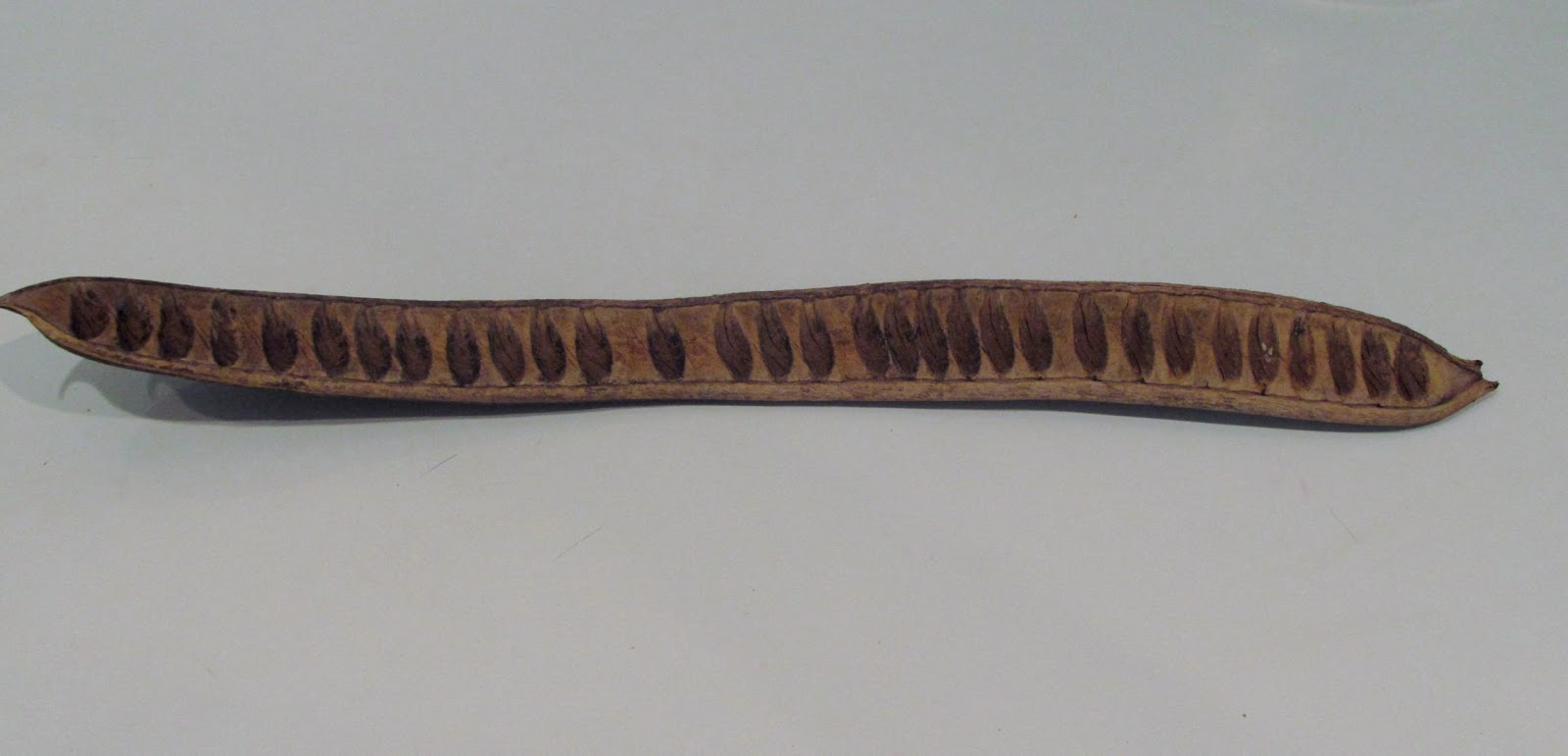
stained strands together. The bottoms of some baskets are lined with bean pods
from the Poinciana tree. Sturdy as leather, the pods add functionality to her
pieces.
Collage artists create interesting textures and shapes by
using natural materials in their designs. There are two ways to creatively
capture these items on canvas: the first is to apply paint to the underside of
the object and then press it on canvas or paper; and the second is to lay the
objects (i.e. leaves, flowers, sticks) on the background and spray paint over
it. When the items are removed, the shape of the items remains in outlined form
and transparent color. This treatment makes an incredible under painting for
portraits or abstract pieces.
Jewelry artists sometimes use natural materials like
seeds, bark, and dried peelings in their designs; threading them together with
crocheted strands. I purchased one of these lovely pieces; however, the only
drawback is what I call “natural deterioration.” Some of the items crumble over
time and shed on my clothing. The necklace itself still looks lovely, but my
shirt or blouse ends up covered with pepper-like dust.
I once purchased a homemade pen for my son’s birthday. He’s
a genuine environmentalist and a dedicated recycler. I thought he would enjoy
the pen which was made of recycled wood from an old fence post. The finished
wood had a wonderful grain and was polished to perfection. Other woods the
artist used came from old barns, railroad ties, and demolished houses.
I’ve often admired the leaves and the fruit of a tree in
our neighborhood, but have yet to identify it. The leaves look like that of the
water oak, but the clusters of seed pods do not fit the description in my Audubon
book.
When the pods burst open, they form a flower. At the
center are red berries. If any of you can identify this tree, I’d really
appreciate your feedback. Although the sidewalk below ends up covered with red
berries and broken pods, I managed to collect a few before they were broken.
The pod forms a flower when it opens and when left to dry, the petals become
hard and woody. The tree is messy, but beautiful!
If you use natural materials in your artwork, please
share it with us here. The greatest thing about having a blog is the ability to
share and learn from others.


 Initially, I thought I might come “unglued” and fall
apart the stress was so great, but I didn’t. With the help of others who
pitched in to help, we ended up having a glorious time. I learned how important
it is to be adaptable. When fear and a crisis threaten to shake your sanity and
your coping mechanisms, go with the flow. Roll with the punches and deal with
one crisis at a time. Of course, a sense of humor never hurts either.
Initially, I thought I might come “unglued” and fall
apart the stress was so great, but I didn’t. With the help of others who
pitched in to help, we ended up having a glorious time. I learned how important
it is to be adaptable. When fear and a crisis threaten to shake your sanity and
your coping mechanisms, go with the flow. Roll with the punches and deal with
one crisis at a time. Of course, a sense of humor never hurts either.