Translate

Showing posts with label berries. Show all posts

Saturday, June 1, 2013

Natural Found Materials make Artwork Zing


I’m always amazed at the ingenuity of artists. When budgets are tight, they still manage to find a way to create art. A fantastic artist by the name of Mark Powell creates meaningful portrait drawings on old envelopes and photographed legal documents free for the taking.

Dropped palm fronds are the creative backdrop for another artist who turns them into fish, mermaids, and lion heads. The dried leaves become fins, swishy fish tails, or miens in her adept hands.


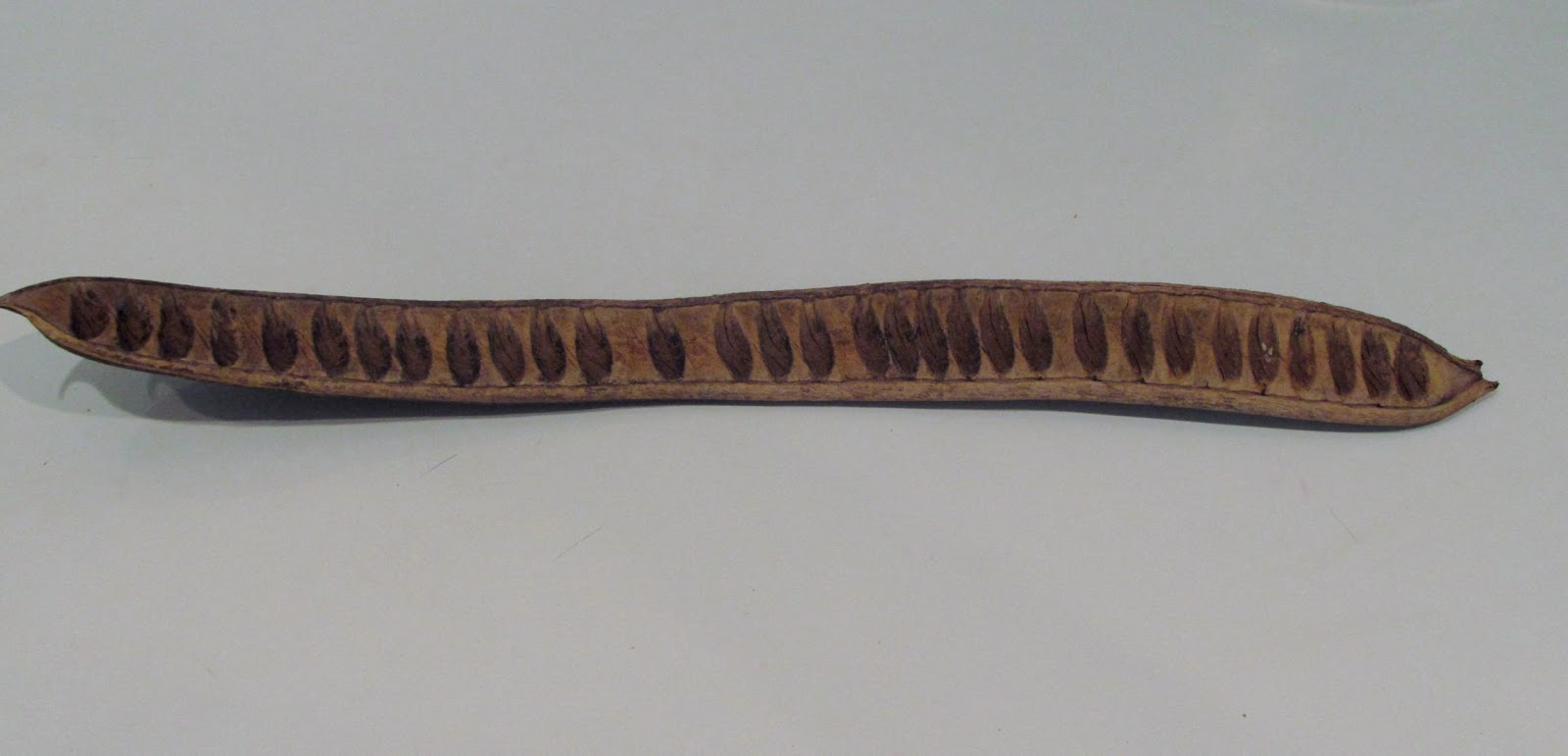
Linda, fell in love with “pine straw” and creates unusual baskets, wall hangings, and sculpture by twisting and weaving natural and stained strands together. The bottoms of some baskets are lined with bean pods from the Poinciana tree. Sturdy as leather, the pods add functionality to her pieces.


Collage artists create interesting textures and shapes by using natural materials in their designs. There are two ways to creatively capture these items on canvas: the first is to apply paint to the underside of the object and then press it on canvas or paper; and the second is to lay the objects (i.e. leaves, flowers, sticks) on the background and spray paint over it. When the items are removed, the shape of the items remains in outlined form and transparent color. This treatment makes an incredible under painting for portraits or abstract pieces.

Jewelry artists sometimes use natural materials like seeds, bark, and dried peelings in their designs; threading them together with crocheted strands. I purchased one of these lovely pieces; however, the only drawback is what I call “natural deterioration.” Some of the items crumble over time and shed on my clothing. The necklace itself still looks lovely, but my shirt or blouse ends up covered with pepper-like dust.


I once purchased a homemade pen for my son’s birthday. He’s a genuine environmentalist and a dedicated recycler. I thought he would enjoy the pen which was made of recycled wood from an old fence post. The finished wood had a wonderful grain and was polished to perfection. Other woods the artist used came from old barns, railroad ties, and demolished houses.

I’ve often admired the leaves and the fruit of a tree in our neighborhood, but have yet to identify it. The leaves look like that of the water oak, but the clusters of seed pods do not fit the description in my Audubon book.


When the pods burst open, they form a flower. At the center are red berries. If any of you can identify this tree, I’d really appreciate your feedback. Although the sidewalk below ends up covered with red berries and broken pods, I managed to collect a few before they were broken. The pod forms a flower when it opens and when left to dry, the petals become hard and woody. The tree is messy, but beautiful!


If you use natural materials in your artwork, please share it with us here. The greatest thing about having a blog is the ability to share and learn from others.

Friday, November 9, 2012

Giving Yourself Permission to Fly


"Arabesque" 14x18 oil on canvas
Do you notice how often you hold yourself back with negative thinking? “I’m not good enough. I don’t want to make a fool out of myself. Others may think I’m weird. Who am I to compete with the “pros?” And on and on, we tear ourselves down.

When we let ourselves go, when we “let it all hang out,” so to speak, we acknowledge that we trust our own instincts and ideas. We give ourselves permission to try, to experiment, and to create what is uniquely ours. This requires boldness and courage on our part. But there is no other way.

"Anhinga in Paradise" 16x20 watercolor
If we want to excel, to soar, and to release the grandeur that is in us. We must let go of fear, doubt, and dependency. We must stand alone and seek our own place in the sun. We must value our own opinions and ideas at least as much as we value others.

Skill cannot be increased if we decrease the motivation behind it. We add fuel to our dreams when we fan the flames of confidence and hope. Strength comes gradually as we forge ahead in spite of fear. We keep working toward our goal, letting go of the things that weigh us down or hold us back.

"Loggerhead Shrike in Springtime" 16x20 acrylic on panel
The adage “If at first you don’t succeed, try, try again,” may be old, but the concept is still fresh and new. We must pick ourselves up after we fall or fail, and try again. Repeating this behavior over and over again will eventually lead to success.

Hard work, blood, sweat and tears are still the only way to achieve anything worthwhile. If you take the easy way out or cheat on the principles, you end up hurting yourself.

A friend of mine had a mentally disabled child.  She started standing and walking before she learned to crawl. There were many things she did “out of order” and her brain had devised alternative patterns that slowed down and impeded her mental development.

Volunteers came in each day to work with the child. They moved her young legs across the floor and taught her how to crawl. They worked with her hands, and played games to provide new patterning for her brain.

"Berry Christmas" 16x20 acrylic on panel
In God’s wisdom, a person must learn to crawl before he can walk. He must learn to read before he can gain knowledge. He must practice before he can play or perform.

These are the same patterns and “models” for success. Developing skill is difficult, but it is essential. Talent is a plus. Love and desire are important components. But practice and hard work are the wings on which we fly.

"Sandhill Cranes at Twilight" 24x30 mixed-med on canvas
Featured Artist
Light & shadow video by Stan Prokopenko


Thursday, August 16, 2012

In the beginning --my Father the Fisherman

"Raccoons at Sunrise", 16x20 acrylic canvas

Every now and then, I reprint this article so my new readers and followers may get to know me and better understand why nature is such an integral part of who I am.

I grew up in an emerald green valley ringed on all sides by a craggy strip of mountains known as the Wasatch front. These rugged giants, and the springs, lakes, and rivers that divide them, were the guardians of my youth. From my bedroom window, the mountains rose like giant hands in prayer; casting benevolent shadows on the surrounding neighborhoods and farms.

On clear summer days, the sky filled our valley with morning light long before the sun had reached its crest on the jagged peaks and thrown off its coverlet of shadow cast by aspen, Juniper, and sage. 

A neighbor’s rooster proclaimed the break of day, and sounds of engines starting and cattle lowing struck the chords and the notes that play out in my head even now.

"Americana" 16x20 acrylic on canvas

On the Western side of the valley, the distant mountains completed the circle framing a patchwork of fields and farms that spread out on the valley floor like a farm wife’s quilt. At day’s end, the sun, saving the best for last, celebrated its descent in triumphant tones of amber and rose before snuggling deep into mountain shadow.

On evenings such as this, time stood still as I watched my father practice the art of fly tying. Like a true artist, he adjusted clamp and vice to secure the hook while he twisted and wrapped the tiny feathers into place. Although each fly was unique, he duplicated one lusty specimen many times over for its ability to snag rainbow trout and German browns.

"Wasatch Mountains" 11x14 watercolor

 With the same skill he used to cast his fishing line in a timeless dance over canyon waters, he cast his children out to experience life. If we encountered rough waters or found ourselves in over our heads, he would reel us back in for further instruction.

Sometimes his reprimands were harsh. At those times, his words cut through our disobedience with the sharp edge of truth. Then he would cast us out again, giving us more line from time to time, until we got it right.

"Berry Picking Time" 16x20 acrylic 

 Because of my father’s skill as an angler, I grew up with a man-sized appetite for pan-fried trout. Father cleaned them. Mother cooked them -- dusted in flour and fried in butter, without the cholesterol guilt or fat gram shame. We dined on fish two or three times a week. The extra fish were frozen for winter meals and to keep my father’s dreams alive for the next fishing season.

Sometimes the family went with him on his fishing expeditions, wandering the byways and dirt roads of Southern Idaho, Wyoming, and Northern Utah in search of the best fishing holes. He waded up to his armpits in the rivers and dams along the Wasatch front; the winding Snake River, the wide Green River, and the brilliant blue Bear Lake.

When my father could no longer fish, he shared the woven intricacies of fly tying with his grandchildren, leaving them an inheritance that would continue on like an echo in the same canyons and mountain streams.

"Blending In" 16x20 acrylic canvas

Friday, November 18, 2011

A Christmas Shrub? Give me a Break!

I’d like to repeat an article here which I published near Christmas time last year titled: “The Brazilian Pepper Tree Saga” by Carol Allen Anfinsen ( originally at http://Blogz.Org.Ning/Profile/blogs/ ).


The painting is of a mocking bird in the branches of one of those “bushes” eating the berries. They do love them and guard their territory from other birds.

The Brazilian-pepper tree, alias Christmas-berry tree or Florida Holly, is an attractive shrub that sprouts red berries part of the year, grows tall, and spreads wide. When I first moved to Florida, I enjoyed watching the wide variety of birds that fluttered in their branches. So when the landscape crew attacked them with machetes and axes, I was enraged. Had we come to this in our obsession for perfectly trimmed hedges and weed free lawns, I thought?

Yes, I would later acknowledge, the Brazilian-pepper bushes were beginning to take over the hedgerow, and their absence meant that I could now see the field behind where cows grazed with cattle egret; but what about the birds? Hadn’t the pepper trees been food and refuge for the brown thrashers, the cardinals, the northern bobwhites and robins, the local mocking birds?


Before I launched into assault mode, I did some reading and investigating; turns out, that attractive Brazilian pepper is considered “one of the worst exotic pest plants” in the State of Florida. Wouldn’t you know!


Brought here from Brazil in the 1800s, the plant was used as an ornamental for its beautiful red berries and shiny green leaves. Deceivingly charming, the plant is part of the poison ivy, oak and sumac family that many people are allergic to. When crushed, the leaves smell like turpentine and can irritate the skin, nose and lungs. No wonder my allergies had flared up in Florida.

Why is the plant so prolific, I wondered? Bingo: “the pepper grows well in poor soil and shade” and spreads wildly when the conditions for growth are optimum – plenty of sunshine, plenty of rain. Birds and raccoons find the berries delicious and spread the seeds through their guano and scat.


How is that a threat to Florida?

• The pepper tree shades out native plants

• The pepper destroys foraging areas for herons, egrets and other water birds

• The pepper’s roots get so thoroughly tangled up with mangrove roots that it’s impossible to uproot them

The beautiful Brazilian-pepper is on Florida’s “do not plant” list, and its “sale is against the law.” And I thought it was a harmless shrub; if looks could kill.

Today I smile as I walk past the hedgerow. Young leaves are sprouting, filling in naked branches replenished by sun and space. The peppers are sprawled out behind them; roots exposed, leaves withering on their last gasp. A few yards south, a fence with a stand of pepper trees grows rampant; the property of another developer who will eventually face the removal of this encroaching invader.

Nurseries or home & garden magazines are way off base to encourage the planting of these bushes. They will eventually spread, overcrowd, and destroy the natural vegetation in your yard. Find something better to plant! Please.