
What is sea glass? Where is it found? Why do so many colors end up together in one location? What can you do with the beautiful gems you’ve found?
Before you get all excited about gathering some for yourself, be aware that
many beaches restrict taking any glass
away. And some of the best places to find glass are out of the way locations
that may be difficult to reach.
The following site explains where this glass comes from and how long it
takes to make the smooth rounded pieces that people seek.
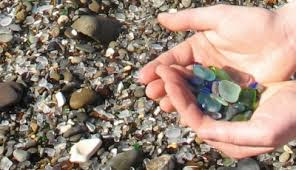

The Colors
of Sea Glass
Where Do They Come From?
It takes decades for broken glass to "become" sea glass.
If you think about it, the common colors of sea glass, Green, Brown &
White are still in wide use today......Rarer colors of sea glass are pieces
that the color has not been made or used commercially for many years.
“We have broken the colors into rarity categories, it is a general rule and not to be carved in stone (or glass!) as certain colors can be found more readily in some areas. For Example, lavender glass can be a rarity in some areas, yet abundant in Maine & Canada; but hardly ever found in the islands. Next time you're in an antique shop or flea market, look at the glass items and see if you haven't found a piece of glass this color!

“We have broken the colors into rarity categories, it is a general rule and not to be carved in stone (or glass!) as certain colors can be found more readily in some areas. For Example, lavender glass can be a rarity in some areas, yet abundant in Maine & Canada; but hardly ever found in the islands. Next time you're in an antique shop or flea market, look at the glass items and see if you haven't found a piece of glass this color!

“By The Sea Jewelry is proud to offer the finest Genuine Sea Glass Jewelry in just about every color
of sea glass in the world! This glass knowledge is based on 28 years of
collecting and decades of researching the origins of our glass.”
LINK: Colors of the Sea Glass
The rough and tumble journey back and forth in tide water creates rounded
corners and a smooth surface. The colors become almost translucent. If you find
some in a shop or from an artist, check it out carefully to make sure it is
real sea glass and not fake. The color and clarity can give you clues.
Google has a wonderful search bar where you can find just about anything.
They have a guide to show you where
to find sea glass, a book on how to tell
if it’s real, and items that are made from this precious glass. Remember that
what makes it valuable is the origin
of the original glass, and the years it took to tumble it into a smooth, clear
stone.


GOOGLE LINK: All about Sea Glass
There is a difference between fresh water glass and sea glass that is
made smooth and beautiful by the salt water. According to the following link,
there are also legends attached to this fascinating wonder of the world.
Sailors long ago thought that the blue ones were mermaid tears that spilled
ashore.


For some more history and help with identification, go to: Glass Beach Jewelry
This remarkable gift from the sea can be yours for a price, unless you’re
lucky enough to find one of those hidden coves where the tides have come and
gone for hundreds of years. Many of these pieces will still be in a state of
development. Their edges may be sharp; their size may be small, and their shape
odd.
But if you persevere, you may find a colorful stone that possesses that
clear see-through sparkle. If the color is rare and the size is large you may
have the beginnings of a treasured necklace or the centerpiece of a priceless
mosaic table.


