Translate

Showing posts with label China. Show all posts

Thursday, November 3, 2016

Bamboo is Strong; Resilient and Exotic

In Florida people often refer to bamboo as cane. There are so many varieties, that one word “cane” manages to cover them all.

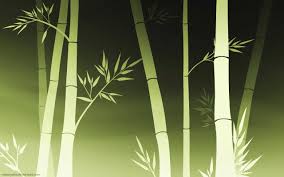
For artists bamboo is more than a building material or a symbol of good luck. Bamboo has become the exotic favorite in paintings signifying well being and a good and prosperous life; more than that its jointed stalk is not only sturdy, but uniquely oriental in nature. Chinese and Japanese paintings almost always include a smattering of bamboo and sometimes include a Panda bear or two since bamboo is their main diet.


Indigenous in many parts of the world bamboo cane is used to construct houses, provide privacy and fencing, and in the construction of lasting dinnerware, utensils and furniture. In numerous countries, bamboo is the key ingredient to peaceful domesticity and protection.

Bamboo is a fast-growing plant; between two or three foot a year. The coverage is thick and vibrant providing a tall privacy hedge within two or three year’s time. This fast growth can also be controlled by pruning and purchasing clumping varieties. Some types grow vine-like strands across the ground that allows the bamboo to spread.


Many artists vary the existing colors to lend a bit of magic and aura to the finished painting. Examples in this blog of actual photos and artwork show the depth, design and creativity of each individual artist. I have toyed with the idea of creating a canvas of my own, but haven’t yet decided how to give it my own personal flavor. 

You may want to design your own unique original. There are myriad examples found on fabrics and textiles. Tommy Bahamas’ exquisite patterns on men’s shirts often use a palm frond motif along with hibiscus flowers and/or bamboo stalks and leaves. The Tropical and exotic when combined create sensational color and movement.


Tuesday, May 28, 2013

“Too much stuff” -- and More!


"Kindred Spirits II" 24x30 acrylic on canvas
Today’s Guest Blogger is Robert Genn*

Recently, Ed Kissane of Wantagh, New York wrote, "I'm constantly fighting a flood of paper that comes into my life. I have a bedroom and a studio and I try to keep the areas clear, but it grows every day like a giant amoeba. I try to downsize but I'm losing. The piles of paper diminish my time at the easel. (Magazines, book reviews, etc.) There is always something to read and once again the creative moments lose out. Any suggestions?"

Thanks, Ed. Whenever I hear this one I think "avoidance system." I once knew a painter who subscribed to all the magazines, including ones in foreign languages he didn't understand. His wholesale subscriptions kept him easel-free for several decades. One day he thought he might paint, but it was too late. That night he subscribed to the big bundle in the sky.

"Moody Blues" 16x20 oil on acrylic underpainting canvas
 For self-employed artists, desire needs to trump distraction. Even regular checks in the mail shouldn't hinder an artist from his self-appointed rounds.

There's something else as well. Too many art magazines may be bad for you. It's great to keep informed of the latest trends in New York, London and Paris, but what about the trending of your own creativity? Too much awareness of what's out there can give an artist a dose of, "What's the use? If everybody else is so wonderful, what chance is there for little old me?"

"Kindred Spirits I" 24x30 acrylic on canvas
How does one act against these common self-destructive tendencies? Taking into account that personal progress may have something to do with available talent or ego-drive, here are a few ideas:

·         Begin work before you're fully awake.
·         Name and claim your own creative processes.
·         Fall in love with your daily work habits.
·         Take time for creative novelty and exploration.

·         Teach yourself the arts of multitask and multi-track.
·         Alternate energetic activity with relaxation and calm.
·         Live in the work of your own making, not that of others.
·         Pencil in projects and set the unconscious mind turning.
·         Have your magazines delivered somewhere else.

The story of individual progress is largely one of moving from the business of being entertained to the business of entertaining yourself. Blessed are those whose main entertainment is their work.

"First Daffodil" 16x20 acrylic on canvas
PS  Esoterica: I'm laptopping you from Yu Yuan (Garden of Peace and Comfort) in Shanghai, China. Koi circle among the yellow and white lotus as a rhododendron drops petals, forming a miniature fleet that moves slowly away on the stillness of the pond. A green heron waits for my thoughts from a nearby rocky ledge, and I'm remembering a kiosk just outside the dragon wall hawking magazines and newspapers printed in Mandarin and Cantonese. Alone in this inner fragrance, I'm considering the nature of passion.
Featured Responses: Alternative to the instant Live Comments, Featured Responses are illustrated and edited for content. If you would like to submit your own for possible inclusion, please do so. Just click 'reply' on this letter or write to rgenn@saraphina.com

*(c) Copyright 2013 Robert Genn. If you wish to copy this material to other publications or mail lists, please ask for permission by writing rgenn@saraphina.com. Thanks for your friendship.

Tuesday, July 10, 2012

The Ancient Art of Painting with Coffee (or Tea)


A new LinkedIn Group said “for coffee painters only.” I couldn’t resist. “What is coffee painting?” I asked. One question led to another; and before I knew it, I was hooked!
From India -- Coffee Paintings By Amita & Mira Chudasama


This environmentally safe medium which sounds cutting edge and modern is actually as old as time itself. First used in China, Thailand, and India, coffee and tea as a painting medium has been around for centuries. 


It’s safe, inexpensive and extremely versatile creating wonderful textures and values. But from what I’ve learned, it’s not as easy as it sounds. For enduring quality, the mixture must have the right amounts of coffee or tea, and water. One painter added a few squirts of Elmer’s Glue for consistency and permanency.

The beauty of it all is it gives the artist an opportunity to experiment and to be creative. Used with charcoal, pencil or ink, the results are simply amazing!

My favorite artist uses tea to create wonderful characters that charm and humor us. Brian Kesinger ‘s “Tea Girls” are whimsical, authentic, and creatively crafted. Brian sells his creations on Fine Art America (FAA) and at the following link: http://www.bkartonline.com/


YouTube has helpful videos on coffee painting from a basic “how to” to more complex training pieces.


There are other applications you may find of interest. In my mixed media painting “Lucky Lady” I used an actual playing card burned on the edges. Had I known how delightfully coffee and tea stains make things look old, I would have used the YouTube technique here: Aging/antiquing paper:


Use your imagination and have fun with this truly ancient art.