Translate

Showing posts with label design. Show all posts

Thursday, November 3, 2016

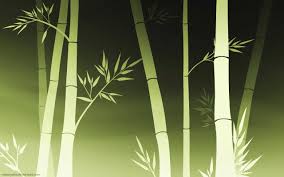
Bamboo is Strong; Resilient and Exotic

In Florida people often refer to bamboo as cane. There are so many varieties, that one word “cane” manages to cover them all.

For artists bamboo is more than a building material or a symbol of good luck. Bamboo has become the exotic favorite in paintings signifying well being and a good and prosperous life; more than that its jointed stalk is not only sturdy, but uniquely oriental in nature. Chinese and Japanese paintings almost always include a smattering of bamboo and sometimes include a Panda bear or two since bamboo is their main diet.


Indigenous in many parts of the world bamboo cane is used to construct houses, provide privacy and fencing, and in the construction of lasting dinnerware, utensils and furniture. In numerous countries, bamboo is the key ingredient to peaceful domesticity and protection.

Bamboo is a fast-growing plant; between two or three foot a year. The coverage is thick and vibrant providing a tall privacy hedge within two or three year’s time. This fast growth can also be controlled by pruning and purchasing clumping varieties. Some types grow vine-like strands across the ground that allows the bamboo to spread.


Many artists vary the existing colors to lend a bit of magic and aura to the finished painting. Examples in this blog of actual photos and artwork show the depth, design and creativity of each individual artist. I have toyed with the idea of creating a canvas of my own, but haven’t yet decided how to give it my own personal flavor. 

You may want to design your own unique original. There are myriad examples found on fabrics and textiles. Tommy Bahamas’ exquisite patterns on men’s shirts often use a palm frond motif along with hibiscus flowers and/or bamboo stalks and leaves. The Tropical and exotic when combined create sensational color and movement.


Tuesday, July 12, 2016

Artists Copy from Nature Either Intentionally or Unawares

Nine-Banded Armadillo -- a small knight in protective armor
Many artists pride themselves on their own ingenuity believing that what they create is unique or has never been done before. But the facts are that styles and designs repeat themselves over the centuries. Artists only do a variation on what has been done before.

Nature provides us with countless designs and shapes. Unconsciously we bring them into our work and they become a part of whatever we create. The saying: “There is nothing new under the sun” was spoken (or written) for a reason. It is true. Conjure, if you will, the varied shapes and intricacies of a flower or a leaf; an insect, the odd shapes on a giraffe, the stripes of a zebra, a caterpillar’s fuzzy or lined patterns.
The things that surround us find their way into our art. We manipulate them. We re-color them. We may even change their shape, but the origins of idea are still formed from that which we recall. Even abstract forms are reborn on canvas maintaining a semblance of the original nugget of thought. Scientists also admit that they create and change those things that already exist. They may duplicate life, but they cannot create it without using parts of that which already exists in nature.

I’ve drawn many simple creatures of nature simply because their intricate outer covering intrigued me. Usually I do some research to discover how unique and independent these magnificent insects or animals are in the scheme of things.
A quick sketch of an armadillo I saw while out walking.

Yesterday morning my husband discovered two young armadillos foraging in our back yard. I snapped a photo hoping to capture them in the early light. 

Normally, armadillos sleep during the day; but these two were still in the throes of youth, and were perhaps more daring than their parents. These were “nine-banded” armadillos protected by a hard, scaled shell that some playfully call “armor.”
Two nine-banded armadillos in our back yard.
Armadillos have poor eyesight which explains why I was able to stand fairly close without getting them overly excited. They can’t hear very well either, but if attacked or fearful, they will roll into a tough, round ball.

How do they eat? They are expert at burrowing and can smell insects nestled in the ground. They make three to five inch circular holes boring for a meal. Usually we don’t see them, but we know that they have been in our yard by these small holes placed at intervals in the soft earth of our flower beds.

"Nine-banded armadillos do not have any front teeth; they have rows of 28-32 peg-like teeth in the back of the mouth. Their diet consists mostly of insects and invertebrates but on occasion they will eat a small vertebrate, berries, or mushrooms. They burrow to find insects and other invertebrates. They also will root around ground litter to find their food.

"Armadillos breed in July, but the embryo is dormant until November. In March the females give birth to four young which are always the same gender because they are identical quadruplets. The armor of armadillo young is soft and leathery, becoming firmer with age.
Thanks to the University of Miami web site I learned a lot about these beautifully designed warriors."
Another shot of our back yard armadillos.
Somewhat alarming about this particular animal, known as the nine-banded armadillo, is that in rare occasions they have been known to spread leprosy. But according to the Smithsonian Institute, “leprosy is a wimp of a pathogen. It is so fragile that it dies quickly outside the body and is notoriously difficult to grow in lab conditions. But with a body temperature of just 90 degrees, the armadillo presents a kind of Goldilocks condition for the disease—not too hot, not too cold. Bacterial transmission to people can occur when we handle or eat the animal."

Yes, in some areas they do eat these small animals. According to connoisseurs, armadillos taste like chicken. If you're hungry for something outrageous, search for armadillo recipes. My own gut reaction is “Why would I want to eat a possible carrier of leprosy?” I’ll just leave it at that.

“Though Hansen’s disease effects 250,00 people worldwide, it only infects 150 to 250 Americans. Even more reassuring: up to 95 percent of the population is genetically unsusceptible to contracting it. And these days, it is highly treatable, and not nearly as contagious as once believe.

"And as for armadillos—the risk of transmission to humans is low, only the nine-banded armadillo is known to carry the disease. And most people in the U.S. who come down with the chronic bacterial disease get it from other people while traveling outside the country.

“Experts say the easiest way to avoid contagion is to simply avoid unnecessary contact with the critters. And, of course, they advise not to go hunting, skinning or eating them (which is a rule that the armadillos would probably appreciate, too)."
From the Smithsonian @ http://www.smithsonianmag.com/smart-news/how-armadillos-can-spread-leprosy-180954440/#Iy4eJTt55scIlMAW.99

Saturday, January 17, 2015

Foodies who Love to Paint, and Artists who Paint what they Eat


We all love to eat. Food is the essence of family get-togethers and camaraderie. Dining is our point of caring, celebrating, and nourishing those we love. There is an intimacy in eating together and biting into succulent morsels of exquisitely prepared food in the warmth of family and friends.

Food is also survival. It is life. Food is pleasure. It’s not only pleasing to the palate, but to the eye. Good cooks and chefs are as creative as any artist. Their finished products look like works of art and taste even better!

I’m not the only one who’s noticed. Artists from past to present have recognized the richness of color and the distinction of form that food presents. Photographers and advertisers have been aware of its beauty for a long, long time. Artists are again turning to the variety and fun that food can provide. In recent years, there has been a revival of sorts in the painting of everything scrumptious.


Today many artists are using their culinary skills in designing and presenting food as art. Their tantalizing compositions literally look “good enough to eat.” 

If you want to know what’s trending in the world, check out Twitter, Pinterest, and YouTube. In all likelihood, food is playing a major part. Recipes are being tried and shared as never before. People are concerned about nutrition, gluten, lactose, fats, and GMO’s (genetically modified organisms).

Our food sources are not only at risk, but more people have allergies and food sensitivities than ever before. I’m lactose intolerant and, in addition, was forced to restrict myself to gluten free products. People in general are focused on eating healthier foods.


Even that staple golden honey is at risk. In a Monsanto AD recently, the discussion centered on endangered honey bees. Without honey bees, some of our most nutritious fruits, vegetables and nuts would not be pollinated. 

Farmers rely heavily on honey bees in order to grow a crop. When the Biblical heroes talked about wanting a land “of milk and honey,” they knew how important these creatures were to the production of good things to eat. Even here in Florida, 80% of the orange groves are pollinated by honey bees. Without them there would be no oranges and no honey!


Beginning artists often focus on food in learning about color and form. Still life works with fruit is popular in practicing shape, shadow, and light. This is a wonderful way to experiment and branch off into cubism and abstraction. Pick up a brush and try it! The results may be delicious.


Friday, November 28, 2014

Balance and Harmony Keep a Composition or a Design in Check

"Victims of War" acrylic on canvas
I know an art teacher who also owns an art store. One day he showed me his paintings that were hung around the entire shop near the ceiling. He used these in classes for examples and demonstration.

“My paintings used to go so fast, I couldn’t keep any hanging,” he said. “Now I can’t sell any of them.”

The paintings were stunning landscapes of Florida scenes and of the Gulf; traditional compositions that once “brought a hefty price,” he complained.

Today “wild is in.” Even the works of amateurs are being bought up if they are unusual, colorful, and a tad weird. Perhaps it’s a reflection of the times and our confused and undisciplined society. Anything goes as long as it entertains and dazzles the eye; fads that may in time become the new “norm.”

Finding the right balance is a real dilemma every artist grapples with. Keeping one foot in the real world and the other in the solid traditions of the past is a struggle. When you allow yourself to push against the outer limits, or by way of contrast show restraint, a judgment call must be made based on each artist’s level of experience and training.

"Prayer Circles"  mixed media on canvas
I enjoy the humor that many artists use to invite people into their perspective. There are so many fearful and chaotic events happening at home and around the globe to cause anxiety. Some “comic relief” is healthy and relieves stress. Conversation pieces that cause laughter rather than thoughtful reflection may be just what the doctor ordered.

Tactile paintings: pop art, half art and half craft invite us to touch and examine. Critics lament that this practice degrades and gives real works of art a tawdry and cheap appeal. But they are selling none-the-less because they’re affordable and fun.

Trends come and go. What is in fashion today may be gone tomorrow. Artists must learn to adapt to the changing scene and create a unique and appealing style that sets them apart from the rest; keeping in mind that the classics, the centuries old tried and true methods of the past have weathered the test of time and will endure.

"Moody Blues" mixed media on canvas
Vibrant color is a significant part of this new genre. From the book: “Color Design Workbook” by Adams Morioka and Terey Stone, the authors’ state: “Color is a visual language in and of itself; it can attract the eye and focus attention on the intended message in the work. Color can be used to irritate or relax, encourage participation or alienate.

Advertiser Josef Albers remarked that “Whether bright or dull, singular or complex, physiological or psychological, theoretical or experiential, the persuasive power of color attracts and motivates.”

Also from the book: “As humans, we seek balance, especially in terms of color. For example, when exposed to a particular hue, our brains seem to expect the complementary color. If it is present, the combination looks vibrant. If it is absent, our brains tend to produce it to form a balance.” 

These very reasons alone explain why one painting is chosen over another. Although people see colors in different ways, they almost always choose that which is pleasing to the senses. With knowledge and experimentation, you too can be a part of those who sell on a regular basis.

"Cafe' Costa Rica" acrylic on canvas

Wednesday, May 14, 2014

Is that Tired Feeling really Boredom?

(work-in-progress "Tickles from God" a rainy day painting)
There are times in our lives when we feel drained, empty, and fatigued like we have nothing else to give. Instead of slacking off, what we may need is a new project. Once we’re slapping on the paint, everything else seems small and insignificant.

Do what you love, take time for yourself, and your engines start running again; full speed ahead. Just when you think you’re tired and overworked, you may actually be bored and need to shake things up a bit. That’s what my latest work-in-progress did for me. I was having trouble finishing my rain painting: “Tickles from God,” and I needed something more difficult and exciting.

I enjoy painting close ups, not only of people, but of nature. Flowers, fruit, leaves, birds and animals call out to my wild side and put me in touch with the earth. Like an itch that needs to be scratched, I long to walk barefoot again without wincing in pain. I want to dig a hole in my garden and bury a new plant that will add a bright touch of color in an obscure spot.

"Lady in Waiting" 14 x 11 oil on canvas (SOLD)
Prints available

I want to get my hands dirty. I want to feel the warmth of the soil under my fingernails. Of course, since I moved to Florida I’m a tad squeamish about the lizards, snakes and spiders. Having almost died from the bite of an eight legged brown recluse, I now wear garden gloves and the sensations are muted. Still the experience provides me with an impetus to get back to nature and painting.

My latest work-in-progress titled: “Namesake” came to me in a moment of reverie thinking about the beautiful lilies in Minnesota. Tiger lilies have always been my favorite perennial, and the thought of combining the flowers with a tiger was irresistible.
(work-in-progress: "Namesake" will add tiger lilies)


Other ideas churning around in my head have to do with the wonderful henna paintings Indian women do on their bodies before marriage. These intricate drawings are not permanent, but they adorn the wearer with Lacy motifs that exaggerate the beauty of a woman’s body and the fragile lace of the wedding dress. 


Artists are using these same techniques to embellish images with colorful designs that add an abstract quality to the finished piece. Female cancer patients are adorning their shaven heads with these patterns which just goes to show you that "bald can be beautiful!"


I hope you enjoy these videos: