In Florida people often refer to bamboo as cane. There are so many varieties,
that one word “cane” manages to cover them all.
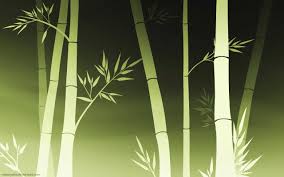
For artists bamboo is more than a building material or a symbol of good
luck. Bamboo has become the exotic favorite in paintings signifying well being
and a good and prosperous life; more than that its jointed stalk is not only
sturdy, but uniquely oriental in nature. Chinese and Japanese paintings almost
always include a smattering of bamboo and sometimes include a Panda bear or two
since bamboo is their main diet.
Indigenous in many parts of the world bamboo cane is used to construct
houses, provide privacy and fencing, and in the construction of lasting dinnerware, utensils
and furniture. In numerous countries, bamboo is the key ingredient to peaceful
domesticity and protection.
Bamboo is a fast-growing plant; between two or three foot a year. The coverage is thick and vibrant
providing a tall privacy hedge within two or three year’s time. This fast growth
can also be controlled by pruning and purchasing clumping varieties. Some types grow vine-like strands across the ground that allows the bamboo to spread.
Many artists vary the existing colors to lend a bit
of magic and aura to the finished painting. Examples in this blog of actual
photos and artwork show the depth, design and creativity of each individual
artist. I have toyed with the idea of creating a canvas of my own, but haven’t
yet decided how to give it my own personal flavor.
You may want to design your own unique original.
There are myriad examples found on fabrics and textiles. Tommy Bahamas’ exquisite
patterns on men’s shirts often use a palm frond motif along with hibiscus
flowers and/or bamboo stalks and leaves. The Tropical and exotic when combined
create sensational color and movement.
Thinking back to grade school, the kids who stand out in my mind, are not the
popular or good looking ones whose faces I have long since forgotten, but the ones
who were different. Even in memory, I can see them clearly. Back then, I felt
their pain and even imagined that I could feel their awkwardness and aloneness.
My sense of
fair play demanded that I do something about it. I decided to befriend each of
them in turns. I got permission from my mother to walk home with Gail to play
for about an hour and then walk back home.
My parents
were poor by most standards. At the time, we lived in an upstairs apartment over
my grandmother’s home. My dad didn’t own a car. Each day, he walked to and from
the Caterpillar Tractor store where he repaired and maintained rental
machinery. In our small town, income levels were low, and most people lived
simply.
Gail, on the
other hand, had a house and a yard with a swing in it. Dirty gray stucco that hadn’t
been painted in years gave the house a somber look. There were no flowers or shrubs. When we finally made our
way inside, I was shocked at the barren rooms.
We looked
through the cupboards for something to eat, but the shelves were bare. A dry
piece of cake with mildew sat on the counter top. Gail’s parents were not at home
and the house gave off an empty lonely vibe. There were no toys to play with
except the swing outside so we ended up playing outdoors.
When I got back
home our small apartment seemed like a castle. Cheerful colors welcomed me and
the sound of my mother's singing while she cooked made me smile. The simple
soup and bread we had for supper seemed like a feast after the barren offerings
of Gail’s existence.
The contrast between our homes re-defined the word “poor” for me. Gail's home expressed a poverty of spirit and a shortage of
amenities. I would never again view myself or my family as lacking in anything.
Over the next
few weeks I went home with Alice, a student who had a visible disability. She was a polio victim as a toddler; as a result, her left arm and leg were shorter. Alice
limped in a funny hop bounce way that made her arms bob with each step. Everyone made fun of
her, except me.
She had six
other brothers and sisters. It was obvious from the moment I stepped inside
their large old fashioned home that she was loved. There were games, giggles, and
a relaxed easy-going ambiance that made time fly. Alice’s life was already
full. No wonder she was able to handle the nasty remarks from her peers. The wisecracks didn't shake her world.
Lorraine was
a bed wetter who sometimes had accidents in class, especially when she was
listening to a story. In the silence of the room her accidents sounded like
raindrops on our wooden floor. The janitor was quietly invited to our room and
mopped up without noise or distraction. The teacher (my grandfather), continued
the story without dropping a beat. The intrusion went unnoticed.
Lorraine was embarrassed,
of course, but she never said a word. If she could have stopped wetting her
pants, she would have. Most of her classmates felt sorry for her. A few
twittered and teased, but most accepted her as she was.
Diane was
taller than most girls her age which made her feel ugly and conspicuous. She
hunched her shoulders in a grotesque slump to make herself appear shorter. Eventually
her posture became permanently cemented for life.
Diane was
funny, friendly and likable. It was easy to overlook her rounded shoulders once
you got to know her. I was posture conscious. My grandfather had encouraged his granddaughters to walk
with books on their heads and their backs straight so Diane’s rounded stance was a constant irritant to me. Her mother
never said a word about it knowing it would make her feel even more
self-conscious. Her unsightly hump made me want to stand even straighter.
When you are
different from others life can be cruel. My heart goes out to those children
who are bullied or made fun of because they stand out.
In a
painting, contrast defines and highlights the center of interest. The differences in
shape, value and color makes the objects jump out at you: dark against light,
round against rectangular, bright against dull. A composition becomes
interesting or impressionable because of these contrasts.
It’s too bad
we don’t view people in the same way. The ones who catch our eye, or
are unique would be seen as beautiful rather than nonconforming or odd. The differences
would be viewed in a new way; much like a highlight or an unusual shape catches
our attention and pulls us into a painting.
We always wonder if our personal artwork presents a style that is unique and
recognizable by others. The answer is yes. Even though your style may be imperfect
and perhaps full of “beginner’s” mistakes or careless errors, your style is evident in almost every painting.
Art Biz Coach, Alyson
Stanfield, describes it this way: “Style is a characteristic or group of
characteristics that we can identify as constant, recurring, coherent, etc.
that is identified with an individual.”
And from the
late Robert Genn: “Each artist’s uniqueness and individualism brings endless
variations. The dynamism invites the “keeping-in-mind-God” to play a part in
the work’s evolution, enriching the process. The job becomes an intellectual as
well as a technical and emotional exercise. The idea is to stretch your brain
so your act of art is your very own.
There are also designated
types of art that differentiate themselves, one from another. For instance, impressionism,
realism, surrealism, expressionism, painterly, folksy, primitive, abstraction,
etc. Most of us learned about these different genres in school. But within each
category, there are definitive components such as the compositional elements,
the brush strokes; are they flamboyant and wide, or detailed and soft?
"#hopeful in India" Acrylic, 24 x 18 canvas
And what about color? The hues and values chosen and the way they have been applied are all recognizable; even the
lines and shapes and how they’re rendered are unique to each artist. Your style is a combination of the mediums, techniques, and subject matter you choose. It’s the extra things you do to distinguish your work from other artists.
As you gain
experience, your work evolves. Your colors become more sophisticated. The
composition more interesting and leading. Increased subtleties and innuendo
begin to tone down the brasher elements and enhance the message. The painting
becomes a soft-spoken message from your heart that is both appealing and
convincing.
You the artist
become an expert at playful seduction and illusion. There are often multiple
messages that beckon and coalesce into one cohesive center of interest. You
begin to sense where and when intensity is needed to mirror your own passion.
You triumph when this melding of heart and soul on canvas are transfixed in the
viewer’s mind long after they have left the scene.
Some may be
riveted in place, studying the twists and turns of your color and vision. This
may not happen overnight. This evolution of style is like giving birth. The
process may be long and hard, but you know it will eventually happen. The
struggle to overcome and to achieve has been done before by all those who
profess to be artists.
"Fish Market" Acrylic on 24 x 18 canvas
Is it worth the
intensity of emotion and the grief of failure? Is climbing to the top of Mount
Everest ever worth the risks? Only those who reach the top may feel exultation.
The building blocks you leave behind (those crass unfinished canvases, those embarrassing
compositions and tacky mistakes) litter the highways and byways of your history
and become the building blocks of your destiny. It is not over until you lay down the brush and either give up or give in to the overwhelming hold artistry has on you.
Long before Jim Henson came on the scene with his Muppets, I was putting on
puppet shows for my parents. I used a box for a stage with fold down
curtains so there was an “opening curtain” and the “closing finale.” A
flashlight served as my stage light.
My colorful characters were drawn and colored on paper and
then glued onto Popsicle sticks. I could remain hidden below the stage and
pop-up my characters for their lines, which I spoke by distorting my voice when
needed.
My indulgent parents listened to my made up stories and the
retelling of fairy tales and applauded enthusiastically at the end. Years
later, when my own daughter asked for a puppet theater, I was delighted.
Ironically, today we’re both artists; she the graduate and me a self-taught tutored student learning by the seat of my pants.
Little did I know then that the things I did as a child
foreshadowed my interest in the arts and my creative bent for writing script
and creating character? Painting came later out of necessity and my abundant
passion and imagination.
Today I am honoring the magnificent puppet master, the late
Jim Henson, for the joy he brought to so many during his lifetime and his
continued legacy. His career spanned several generations and his joy in
creating unique and humorous characters made us all laugh.
JIM HENSON
A Biography
Jim Henson— a
television pioneer, an innovator in puppetry, technology and visual arts, and a
performer—literally brought to life some of the most memorable characters
ever—including the world’s most famous frog, Kermit. Henson’s impact on
entertainment, education and culture continues to this day.
Born September 24, 1936 in Greenville, Mississippi, Henson
spent his early years in Leland, Miss. Throughout his youth, Jim had an
interest in art and, later, television. When he was in the fifth grade, the
Henson family moved to Maryland. There he, often with his older brother Paul,
experimented with a variety of artistic techniques—experiments which eventually
led Henson to the very latest visual media, television.
In 1954, while still in high school, Henson began his
television career performing puppets on a local Washington, DC Saturday morning
program on WTOP-TV. The following year, as a freshman at the University of
Maryland, he was given his own twice-daily, five-minute show, Sam and Friends,
on the local NBC affiliate, WRC-TV. Henson along with his assistant, fellow
University of Maryland student and future wife, Jane Nebel, introduced many
Muppet mainstays—music, humor and innovative technical tricks (such as
eliminating the puppet stage and using the television itself as the
proscenium).
Perhaps most memorably, the show featured an early version
of Kermit the Frog. The success of Sam and Friends led to guest appearances on
such national network programs as The Steve Allen Show, The Jack Paar Show and
The Today Show. Henson also began making hundreds of humorous commercials for
sponsors throughout the country.
Having established a group of talented collaborators, he
continued to pursue his career in puppetry and film making. Between 1964 and
1969, Jim produced several experimental films including the award-winning Time
Piece, Youth ‘68, and The Cube. In 1969, Henson unveiled a family of characters
to populate Sesame Street, the groundbreaking children’s show made for public
television. These characters—Ernie and Bert, Oscar the Grouch, Grover, Cookie
Monster and Big Bird among them—continue to entertain and educate today.
Sesame Street demonstrated the Muppets’ undeniable appeal to
children, but Henson strongly believed these characters could entertain a much
wider family audience. After years of trying to sell the idea for The Muppet
Show in the U.S., Henson finally received backing from a London-based television
producer, Lord Lew Grade. In 1975 production began, and in 1976 the world was
introduced to a new family of unforgettable characters, such as Miss Piggy,
Fozzie Bear, Animal, The Great Gonzo and Rizzo the Rat, among others.
Hosted by Kermit the Frog, and accompanied by the musical
meanderings of Doctor Teeth and the Electric Mayhem Band, the Muppets were
joined each week by an international pantheon of guest stars, from Gene Kelly
and Rudolph Nureyev to Steve Martin and John Cleese. The success of The Muppet
Show led to Hollywood, where the Muppets starred in six feature films: The
Muppet Movie, The Great Muppet Caper, The Muppets Take Manhattan, The Muppet
Christmas Carol, Muppet Treasure Island and Muppets From Space.
During the 1980s, in addition to making Muppet movies,
Henson brought two remarkably original fantasy films to the big screen, The
Dark Crystal and Labyrinth. These films challenged Henson to create new kinds
of three-dimensional characters with advanced movement abilities. The multi-talented
staff that helped create these two films formed the basis for what is now known
as Jim Henson’s Creature Shop, and it continues to set industry standards in
animatronics, performance and performance technology. His accomplishments don’t
end there, but my words must.
On May 16, 1990, after a brief illness, Jim Henson died in
New York City. With his keen ability for drawing together a strong team of
performers, artists, and collaborators who shared his vision and creativity,
Henson ensured that his work and unique creative vision would continue. Through
The Jim Henson Company, his work continues to captivate and entertain a global
audience.
My teenage sons idolized Emerson, Lake and Palmer’s version of
“Bohemian Rhapsody.” Here is the Muppet’s version. Fantastic!
"A Joyful Heart" pastel on bristol board, matted and ready to frame
I may be the odd woman out, but jewelry is not my cup of tea. Topping an outfit
off with a smashing pair of handmade earrings is more my style. Gaudy and expensive jewelry
is not.
I prefer an
understated look. I was never into ruffles which make me feel silly. I prefer
simple classic lines that enhance my comfort and put me more in touch with the
person I am.
We all have
different tastes, likes and dislikes. We are each uniquely created. In the same
way that our fingerprints and eyes are not alike, so our preferences in food,
music and clothing vary. The same goes for artwork. None of us will ever see
the same thing. One painting may draw us, the other may repel. That’s how the
“power of the purse” works, and why certain things appeal to a broad spectrum
of people while another is less popular.
"Tansy's Pride" pastel on bristol board; matted and ready to frame
The buying
public is also fickle. Discrimination is often based on current trends and
popular opinion. Someone once said “We are a nation of sheep.” In most
instances we are.
Still, there
are ways for an artist to move past that shallowness. We can acquire a
“universal” appeal that extends beyond the bounds of personality, culture, and
tradition. Certain subjects have broad appeal such as family, love, hope, fun,
dancing, merriment, shared experiences, and familiar landmarks. I’m sure there
are many many more.
A mother and child will usually arouse warm
sentiments. A child learning or experiencing something new for the very first
time is another appealing delight. Animals and especially pets touch a soft
spot within almost everyone. Suffering, pain and sorrow strike a chord that
vibrates the very soul. Any action whether joy, hate or anger that captures the
human condition can be related to by many people.
"Broken" mixed media on canvas SOLD, but prints available
The skill of
an artist in relating these universal truths to others in a way that is
visually exciting and moving can make the experience have even more impact.
Familiar shapes and hues arranged in such a way as to lead the viewer on an
eye-opening or emotional journey is another way of revealing our shared
humanity.
When the
common things that surround us are portrayed, others can relate. Illustrate the
simple beauties of the earth and in the eyes of the viewer their value is
elevated and appreciated. Patterns and textures that replicate nature’s vast
chromatic surface add another layer of “simpatico” that reaches out to others.
Wise use of
space or sparseness of color may also emphasize loneliness, emptiness, or baroness
in a way that detail and color could not; emotions that most of us associate
with loss, devastation, and tragedy which we all experience at some point in
our lives.
The more universal appeal your artwork
contains, the greater the chances that you’ll be successful.
"With these Hands -- Hope" oil over acrylic under painting
Are you guilty of comparing yourself to someone else and then thinking you’re
not as talented or as skilled? Do you try to copy others work; not just to
learn, but because you fear your ideas are not good enough?
Welcome to the world of self-defeat where you beat yourself up with
the disapproving eye of a parent until you feel so inadequate that fear reigns
free; where the unique perspective that lives within you disappears little by
little: death by drowning.
"India Rising -- The Lost" 18x24 acrylic on canvas
When you drown out your own voice by dumping negative thoughts and distorted
impressions over your psych you end up retreating in shame, embarrassment and
disappointment.
In order to defeat “self-defeat,” you need to eliminate the
following thoughts and words from your vocabulary:
"Americana" 16x20 acrylic on canvas
1.What
will other people think?
Who cares what they think? There are as many opinions in the world as there are
people. Since no two people think alike and seldom agree, your opinion is
likely to be different. Embrace that difference! It is what makes you stand out
in a world of sheep. Be bold. Be courageous. Be yourself! Listen and evaluate
what others have to say, but give your own voice equal value.
"Star Billing" mixed media on canvas
2.I’ll
never be as good as Joe or Joan Blow?
Why would you want to be Joe or Joan Blow in the first place? Their unique style
belongs to them. Your unique style is embedded in your DNA. Your fingerprints,
your eyes, your experiences belong only to you. They have made their mark upon
you. Don’t regret your past. Bring it forward. Remember it, use it, bring it
into your work and allow it to effect what you do. Show your stuff!
3.Success is
out of reach – I’m not good enough!Baloney!
Perhaps the problem is “failure to
drive.” What are you willing to give up for success? Are you putting in your
time? Many less talented people achieve success because they are willing to
work for it. Skills require dedication and practice. When you’re ready to give
something up in order to achieve something greater, you’re on your way to
achieving success.
Sometimes we must be willing to fail in order to succeed. We must
make a fool of ourselves and face the music of stepping forward in order to
develop courage and stamina. Failures are stepping stones that can propel us
forward and lead us upward. Don’t allow failures or mistakes to defeat you. Instead,
defeat your fears. Don’t be afraid to put your unique stamp on everything you
do. Eventually it will pay off.
(My fellow-artist and friend, Grace, with her watercolor entry)
Entering your work in a juried competition can be intimidating, especially if
you’re a self-taught artist. Almost everything you’ve drawn or painted has come
from grueling trial and error, and done while comparing yourself to artists with
several degrees tacked onto their names or who may have studied abroad.
Ironically, there are many successful self-taught
artists. A degree doesn’t guarantee success nor does it immediately make you an
artist. In either case, the same principles hold true: practice, practice,
practice.
(Third Place in Juried Competition) "With These Hands -- Love" 16 x 20 OIL on canvas
One basic difference between them is that a solid art education
provides a foundation that gives the artist an edge. Knowing why a painting works
and understanding the building blocks of structure and execution is half the
battle. In the end, success is determined by vision, skill, and persistence.
I’ve seen many discussions online about the value of
juried competition. Is it worth the money, the time, and the possibility of
rejection? The consensus seems to be that it’s rarely worth the money or the
35-40% commission charged for a sale. The value seems to be in promoting the
name and the skill of the artist (assuming that they get in the show), and the
benefits of adding a “win” to your resume. The odds of winning are somewhat
better than winning a lottery, but not much.
(2nd Place Winner -- Juried Competition) "With These Hands -- Wonder" 16 x 20 OIL on canvas
Depending on the judge or juror of the show, your artwork
is subject to their particular whims, likes and dislikes, and their own
education and past influences. Rejection is somewhat subjective. Even in Art
Leagues, I’ve found that the preferences and styles of each artist are effected
by teachers in their past.
The thing that bugs me is that if we listened to these
voices and followed their suggestions or objections rigidly, we’d all start
dishing out artwork in the same dull way without innovation. There would be no
Van Gogh’s or Salvador Dali’s; there would be no Thomas Hart Benton’s or
Picasso’s.
I love what Andy Warhol said: “Art is what you can get
away with!” If we’re always worried about conforming to the rules, or doing
something in a particular way, art would become static.
"Fish Market" 18 x 20 Acrylic on canvas
For an artist to stand out, to be unique and to create
his or her personal style then risks must be taken; experiments must be tried,
rules must be broken. Aah, you say, but first you must know all the rules before
they can be broken. Agreed, but the risk is that in sticking too closely to
accepted forms and norms you may never get beyond the “copy cat” stage of
accepted artistic behavior.
I’m a rebel in my heart of hearts. I’ve always defied
fads and fashion. I’ve always created my own style because I couldn’t afford to
follow current fashion. What I discovered, even in high school, was that I
could create fashion trends by wearing what I had with confidence. Soon others
would be wearing something similar.
"Broken" 11 x 14 mixed media on canvas SOLD (Prints available)
The
same holds true for artists. Confidently create your own personal vision and
you’re bound to be successful.
Yesterday it was my turn to work
in the Art Council of Southwest Florida’s new art gallery at Coconut Point.
This Season, we have a new location; one that should be busier. The
day after a holiday (Veterans Day), however, was slower than watching paint dry. We had only 18 customers, and most of them were other artists
curious to see the work of their peers and to inquire about the possibility of
joining our organization. No sales were recorded, but the day was filled with
conservation and enlightenment.
"IN PROGRESS"
I’m amazed with the ingenuity of individual artists.
The gallery represents an array of subject matter and styles that almost
overwhelm the visitors. It is truly
exciting to be a part of this exhibit. I’m a people person at heart. As a free-lance writer
and consultant before I became an artist, my job was to interview people. This
skill has stayed with me, and I truly enjoy getting to know what makes people “tick.”
"IN PROGRESS -- Next Stage"
Each person, regardless of where they come from or
who they are, has an interesting story to tell. Some have painful stories that
show up in the kind of art they pursue. Others are shy and have difficulty
verbalizing how deeply they feel about their artwork and skill. I listened attentively to two such men who were soft-spoken,
and modest in spite of being well-known and extremely talented. Writers are
somewhat similar. All of their expression goes directly from the head and heart
to paper. They are often reticent to speak in public and shy in personal
relationships. Sometimes success overcomes these feelings and sometimes not.
"Moonshines" 18x24 mixed media on canvas
My most interesting customer was a transvestite who
donned a wig and the dress of an older woman. He seemed perfectly comfortable
with who he was. He used his large hands when he talked, and didn’t disguise his
booming male voice. He spent about an hour with us talking about the artwork,
sharing his own life as an artist, and expressing interest in joining our
network. Artists come in all shapes, sizes, colors, races,
and styles. But there is one thing we all have in common: the way we see the
world in color, shape, and form; and a shared love for expressing our vision.
"Through her Eyes" 9x12 pencil sketch from live model
(at work on "With These Hands--Wonder" 18x24 oil on canvas
In the past century, the discovery and use of DNA has transformed not only our
thinking, but our ability to distinguish one individual from another; a
critical piece of the crime scene puzzle. Fingerprint recognition, which can easily
be distorted or changed, has taken a
backseat to DNA that cannot be altered and is specific to each individual
person.
DNA, the pupils of the eye, the fingerprints make each of
us pretty unique. Add to that our physical, emotional, and intellectual makeup;
the influences of environment, culture, personality, family, ancestry and
genes, and each person has unmistakable characteristics that separate him or
her from the rest of the pack.
"India Rising--the Found" 18x24 mixed media canvas
Some people, including governments, would like each of us
to succumb to a “pack mentality.” They want us to fit us into little boxes they
can label, compartmentalize, manipulate, and tax. Governments in some parts of
the world have been successful at doing this; still, the freedom lovers, the pro-active
doers and thinkers rise to the top and clamor for “liberty or death” (Patrick
Henry).
We must never become a part of the “pack,” especially a
group that can be swayed, hypnotized, manipulated, or threatened. If we lose
our God-given uniqueness, we lose our freedom. Artists and performers must not
be hog tied into conformity or submission. To do so would be to lose our voice,
our identity.
"India Rising--Prince of Thieves" 16x20 mixed media canvas
What makes us special is not only our talent and skill,
it is the way we think, dream, and achieve. Freedom of speech, freedom to
create and build must never be suppressed, unless that liberty begins to corrupt
or restrict the freedom of others.
Why am I waxing philosophic? Because I believe that
each of us leaves an imprint on the
world. From the time we are born until the time we die, we either make the
world a better place to live in or we destroy it bit by terrible bit.
"Blending In" 16x20 acrylic on canvas
The choices we make each day are the predecessor’s of
tomorrow’s outcomes. We can choose to become a part of a destructive force (the
pack), or we can choose to think and act in ways that leave a positive if not
jarring influence on others to wake them up from their complacency.
As professionals we talk about “making our mark on the
world,” but if our focus is not anchored in truth and individualism, the result
may be collectivism. We may find that our freedom and individuality are owned
by the State. Artists of all stripes must protect individual liberty at all
costs in order to preserve our freedom to make a difference.
Featured Artist
Sam Randall, Brisbane, Australia: “I am a self-taught visual artist based in
Brisbane. I have recently made the huge decision to pursue being an artist full
time. My previous career was as a Children's Therapist where art and creativity
were a key foundation to my practice. I have always needed to be in a creative
role or I get bored and dissatisfied.”
I’ve
talked about the importance of networking as you make your way in your career,
and the importance of getting your artwork seen and your name recognized. But there’s
another side of the networking coin that’s even more important. It’s called
connecting.
What’s the difference you might ask? The focus of “connecting”
is your audience. Who are you painting for? Do you paint only for yourself or
do you have something to say? Who do you want to say it to? It’s all about
finding your voice as an artist and connecting with your audience.
This takes networking, a critical step in marketing, to a
whole new level. It means connecting with people in a new way, not just
visually, but emotionally and intellectually. It’s about making your artwork
memorable, recognizable, and desirable. It means connecting to your buyer.
"With These Hands -- Love" 18x24 oil on canvas; framed
This last step may take years for an artist to develop.
What is it about you and your perceptions and attitudes about life that make
you unique and different? How can you incorporate this originality into your
voice so that you may connect with people? Do you want to
make a statement or do you just want to paint pretty pictures?
I’ve asked myself that question many times. I watch what
sells, and I know that a big part of it is painting pretty scenes with dynamic
colors that catch a person’s eye, whimsy, or the décor of their living room.
Sadly, this may make a sale, but unless there is something else to grab the
mind and heart of the viewer, it is quickly forgotten in the stream of other
things in life and other competitive art that grabs for attention.
"An Open Book" 16x20 mixed media on canvas
If we want to make our mark, our voice has to speak volumes about us as individual artists.
Depth of soul, depth of character, and a unique perspective say as much about us
on canvas as does the skill we use in applying paint, composition, and
structure. Success and recognition come when we finally make that connection!
Featured
Artist
Magal Nagar was born in New York, and at age 9 her family relocated to Israel.
At the age of 18, Magal fulfilled her two-year Israeli military obligation,
assisting with the operations of a kibbutz (communal settlement). It was during
this period, inspired by nature in the rural mountain setting of Southern
Israel, that Nagar found her gift and passion for painting. Indeed, through
exploration with color, she had achieved her own intuitive, unique form of self
expression and inner peace. http://www.magalnagarart.com/categories.php




.jpg)
.jpg)


