Translate

Showing posts with label illness. Show all posts

Tuesday, January 19, 2016

Are you Spreading yourself too Thin?

(In honor of Martin Luther King)
If the New Year is any indication of how the next year will go, I’m in trouble. Last year was filled with illnesses, surgeries, and accidents. This year started out with a chest cold and flu in spite of the fact that I had a flu shot. Hence the title of this blog.

Sometimes life throws you a curve ball and it’s all you can do to keep up with its demands. My blogs have been late more often than not. I feel I'm lagging behind and that I"ll never catch up. I haven’t felt like painting or doing anything, but I’m slowly getting back to normal.

(Shadow patterns on pavement)
One thing that's been on my mind is how much art and design is in nature. Inspiration comes naturally when you take a look around and try to recognize the intricacies of detail, contrast and color that exist all around us each day, but we're either too distracted or busy to notice.


Art usually replicates life, and nature is a big part of the equation. Even man-made objects add to the beauty of our surroundings. A brick walkway, tile roofs, sculptured or oriental rugs, baskets, wood grains, leaf patterns, light play and shadow. We are surrounded by artistic designs from our clothing to the food we put on our plates to eat.

Architecture and interior design complement our tastes and become the building blocks that highlight our personalities. Texture adds a tactile dimension and an element of fun. Our homes should reflect who we are and what we enjoy.

(I really need a hair cut!  My painting "Sandhill Cranes" behind me.)

(More beautiful shadow patterns)
You don’t have to be an expert to combine what you love with what brings you joy. Art and design are not complicated. They are simply an expression of who you are. Within your reach, note how many patterns and designs already exist in your home even without the obvious artwork. Wall art adds a third rail by accenting the colors that already exist and by providing an element of surprise or interest to an otherwise boring wall.

Wall art is like the final gilding on a non-descript room. It provides excitement and completion. Artwork ties everything together and adds a finished look to your entire scheme. Linking up with a few interior designers is a good way to get your personal artwork out there and become familiar with the local scene.


Next time you're in a slump, or you feel you've simply spread yourself too thin. Magnify your surroundings. Soak up detail. You don't have to travel or go to foreign lands for inspiration. You just have to remove the clutter from your own mind and focus on the unique that is already in front of you.

Saturday, May 31, 2014

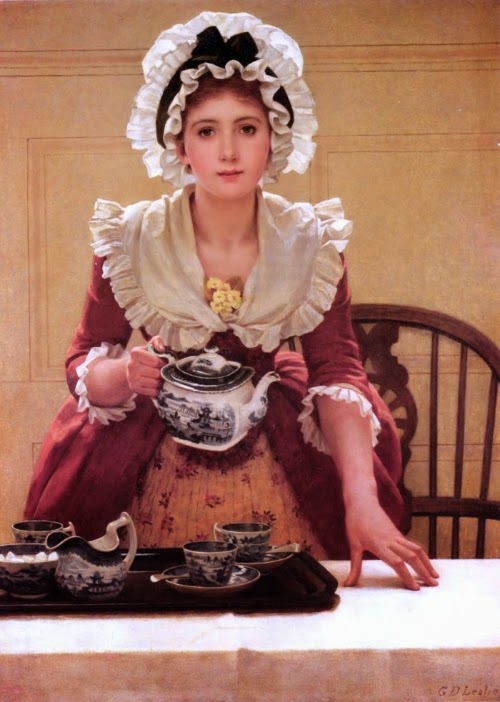
A Cup of Tea – the Perfect Fix for What Ails You


From an early age, I learned that tea was meant for wellness. We drank herbal teas to soothe the stomach, calm the nerves, or to give us energy. If there was an ailment, my mother would find a remedy via tea.

While still in bed following a bout with flu, she’d bring me tea and toast. After barfing in the toilet or a bedside bucket, it was heavenly!  The buttery homemade toast tasted scrumptious dunked in tea. She tried to slow me down as I gulped and chewed, but I felt on the brink of starvation. 

I wanted more, but she made me wait to see if I could hold it down. While I rested, my imagination exploded with pictures of my favorite foods, things a sick stomach would never tolerate like watermelon, summer corn, hot dogs, peaches and ice cream. When my tea finally came for  the second time, I knew I was "all better."


Mom not only loved tea, she loved the cups. She collected fragile china cups with floral designs and classic patterns. She displayed them in a glassed cupboard so that everyone could see them. When friends or relatives came to visit, she’d pull out the fancy cups and fill them to the brim with their favorite tea. If she knew ahead that they were coming, her baking would greet them with aromas of cinnamon and nutmeg.

I have always enjoyed watching the BBC on PBS. Tea is a staple in British comedies and reminds me of home. It’s a cure all for the ills that plague mankind and the answer to almost every problem.

At Christmas time our celebration would not be complete without reading: “A Cup of Christmas Tea” by Tom Hegg and illustrated by Warren Hanson. The story is about a man who drags his feet about seeing an old aunt during the holidays. She recently had a stroke and walks with a crutch. He dreads seeing her in this predicament. After reluctantly paying her a visit, it is he that is repaid with her gift of love and a “Cup of Christmas Tea.”

Everything seems right as rain over a good cup of tea. Its calming warmth cheers the heart and heals the mind. Even the tea bags can soothe swollen eyes after a good cry or shrink puffy eyes after a raucous night out. Moreover, people can paint with this stuff. Beautiful portraits and scenes come alive when painted with various strengths of tea. The result looks much like watercolor.


I once wrote a blog about painting with coffee which is essentially the same process. Most people use instant coffee because it is cheaper. The secret is to pour boiling water over the coffee to make various color strengths. The same holds true for tea. By pouring boiling water in several cups with tea bags you can create color tones depending on how much water you use to dilute the color.

I swore I’d try it, but I still haven’t gotten ‘round to it. I hope this inspires some of you to give it a try!

Painting with Tea


Tuesday, June 4, 2013

Tides by Any Other Name Would Smell as Stinky!

"Window on Pine Island" 16x20 wrapped oil on canvas
What is coarse, toxic, sweeps up marine life in its wake and kills? If you guessed a broom, we're done here. If you answered pollution, you're close. If you said red tides, you're dead on. Never heard of these menacing algae? Let me introduce you.

Every summer at the height of tourist season, a tangle of brownish algae and dead fish cascades onto the Gulf Coast's pristine beaches and the stink is overwhelming; as my mother used to say, "Enough to gag a maggot." What makes these algae such a menace? They produce one of the deadliest toxins known to man.

(original photo of Pine Island)
These harmful algal blooms or HABS wreak havoc on local fishing industries to the tune of $82 million each year. The toxins affect the central nervous system of fish, killing them in vast numbers; limiting the quantities of fresh fish that fisheries depend on. Toxins also may poison shellfish like clams, oysters, and mussels, and make the humans who eat them sick.

These red tide masses affect marine ecosystems in a number of ways. Dense blooms can block sunlight that benefit good algae and sea grasses needed for food. Wildlife and marine mammals like seabirds, manatees, turtles and dolphins may not only get sick, they may die. Hundreds of manatees died as a result of Red Tide in 2012. Humans may suffer severe respiratory or skin ailments. In addition to that, red tides are downright unsightly.

My first reaction to walking on the beach after a red tide wash up was repulsion. Hundreds of putrid dead fish trapped in strange-looking seaweed covered the white sand driving me and many other tourists back to our hotels. Like them, I wanted to know what this stuff was, what it did, and how we could stop it.

Red tides are composed of microscopic algae known as dinoflagellates; their scientific name: karenia brevis. The algal cells are asexual. They produce simply by dividing. To complicate matters, each cell is capable of movement via two flagella that propels them through the water. There is no brainwork involved in this confluence or joining of forces. They drift with the water's ebb and flow, bumping together to form large clumps or "blooms" as their numbers increase.

What makes dinoflagellates different from other microscopic algae? At least two things: their rapid growth and their toxicity both of which raise more questions than answers. Why do these organisms suddenly explode into a massive growing binge? What triggers this growth and why does it produce toxins in some algae and not in others?

Biologists and scientists believe pollution of our waterways may be the leading factor. Pesticides, fertilizers and chemicals are washed into surrounding rivers and lakes and eventually find their way into the sea. At the mouth of these inlets and tributaries, red tides get their first burst of growth which certainly points to pollution as the cause.

But there's a catch: red tides are not a new phenomenon. Fish kills from deadly algae were recorded in 1840 and as long ago as the Spanish explorers who wrote about them in their logs. After years of red tides research, there is still no conclusive evidence or link to pollution. Like many quirks of nature, the trigger may be from natural causes or a series of events that are little understood.


The Fish and Wildlife Research Institute (FWRI) in Florida conducts Red Tide Reports on a regular basis during critical growing periods. Using satellite imagery, high levels of chlorophyll are monitored for possible resurgence of red tides. With the help of modern technology, experts record the size, rate of growth, and location of these HABS.

FWRI works in partnership with the National Oceanic and Atmospheric Administration (NOAA) under the supervision of the U.S. Department of Commerce. NOAA's goal is to "provide the tools to prevent, control, or mitigate the occurrence of HABS." Because red algae can be found in almost any waterway, research labs are positioned worldwide.
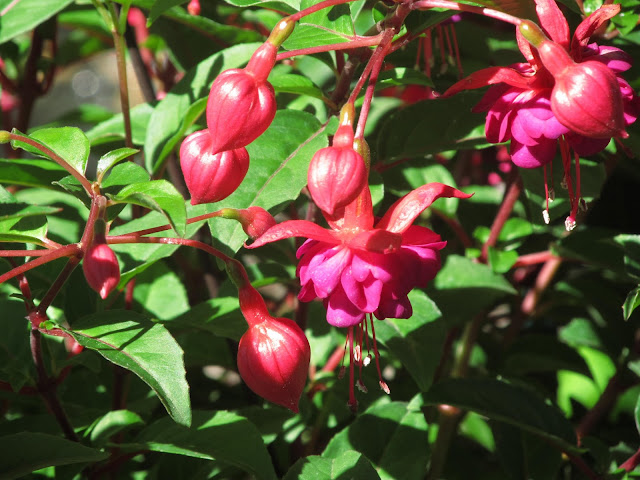
(I want to paint this beautiful Fuschia)
If you would like information about red tides in your own locale, go to http://www.noaa.gov.
What is the missing component that explains why red tides grow faster and wilder during certain times of the year? Is pollution the cause as some suggest? Or is it increased water temperature that naturally encourages the growth of most algae? Until the mystery is solved, Gulf residents and vacationers around the globe must continue to endure the irritation, the blight and the stink of red tides.

Do you have a "stinky" problem in your neck of the woods? Please share it with us.