Translate

Showing posts with label risks. Show all posts

Wednesday, April 16, 2014

Creating the Perfect Composition; it’s all about Focus

"Reggae Night" acrylic on canvas
In art circles, creating a center of interest, relies on “the big three:” dominance, contrast and repetition. Not surprisingly, viewers will look at a painting in the same way they read a book from left to right. It’s ingrained in our schooling and in the way we were taught. The walls of caves were painted from the left, and printed pages throughout history were printed using this innate formula.

It’s only natural then that people will start their perusal of a painting from the left. The best designs not only have a lead in on the left but from several different vantage points. The secret to a successful composition is moving from one point of entry into the painting and around the entire scene. An interesting painting keeps the eye continually moving. If the eye stops at all, it should be on the “center of interest” or the focus of the entire piece. Movement creates energy and excitement.

"Hey, Coconut Mon" mixed media on canvas (the boy is off-center and many of the background parts are blurred)
Contrast and a few well-chosen highlights will emphasize this focal point and continually draw the viewer’s eye back for the impact it makes and the enjoyment it creates. A strong focal point leaves a lasting impression that may influence the reputation and popularity of the artist perhaps even impacting sales.

In an artist’s attempt to create a dramatic center, there are also dangers. If the composition or design components lead the eye automatically to the center we end up with a “bull’s eye” composition. Essentially the eye does not wander through the painting but is trapped in the middle. A Center-focused painting is boring. The eye is locked in and the painting becomes static and uninteresting.

(This painting could have been much better by removing the chest of drawers. The uneven height
and the interesting outline of the figure, buggy, and cat would have been more interesting.
As it is, the eye is locked into a clump in the middle)
You can avoid this death trap by placing your center of interest off-center. Make sure there are enough uneven edges and lines to create interest. Check out the negative space around your focal point. Are the shapes interesting? Are the lines and values leading the eye on an interesting journey to your central focus? By analyzing your composition early on, you can avoid some of the pitfalls.

Another simple device for creating memorable paintings is the principle of “balance.” Do all elements in your painting look the same? Do they all scream out for attention or do some of the parts fade into the background. Having parts of your painting downplayed is called “subordination,” another device for making the center of interest dominant. These contrasts in value and subordination add depth to an otherwise flat painting.

"With These Hands -- Hope" acrylic on canvas (Notice how the background figures are fuzzy
and faded? The focus is on the girl trying to make a basket and her challenger)
Creating out of focus elements may also increase the contrast between the center of interest and the less important parts of a composition. Photographers use this design concept by blurring an otherwise overpowering background so that the focus is clearly on the focal point.

"With these hands -- Love"  (This painting could be improved by adding more shadows, thus giving it depth)
I have made many mistakes over the years, learning the hard way the importance of these timeless truths. Once understood, setting up the perfect composition using these design elements becomes easier.

Wednesday, September 4, 2013

Awash in Color; Electric with Energy

'Greeters instruct artists on the procedures"
My blog title perfectly describes “change-out” time at the Art Council of Southwest Florida Cooperative Art Gallery at Coconut Point. On the first Monday of each month, new paintings are brought in and paintings which have not sold are changed out. There is always excitement in the air and congeniality as artists chit chat, get caught up on the new art scene and the latest gossip.

ACSWF is a juried gallery, and each piece must be judged by a reviewing board who determines which paintings will stay and which must go. The criteria are strict and demanding.
Some artists “play it safe” with predictable scenes and styles. Others take risks to see how far they can push the envelope sometimes ending up on the losing side. The disheartened take their heavy burdens home and hope that next month will be different.

"Registration -- in with the old, out with the new"
I am one of those risk takers. I like to experiment. Sometimes I get lucky, and sometimes I’m disappointed. I stretch myself and challenge myself as much as possible. I like to try different techniques and enliven my palette. There is a certain light or glow I seek that emanates from my paintings. Until I have achieved that look and feel, I am not satisfied.

Every artist that submits artwork in any form is hopeful that theirs will qualify. The gallery is filled with amazing pieces awaiting the thumbs up from the judges. It is a learning process. The judging is a combination of objective analysis, based on the skill and knowledge of the judges, and their subjective opinions of style and taste.


I have sold several pieces online that were rejected by a judge at one point or another in my career. Beauty truly is in “the eye of the beholder.”


Critics are everywhere from the “man on the street” to your favorite aunt Mildred. Everyone has an opinion and they’re all too eager to share it with you. “Why did you do this?” someone once asked me. When I said, “I felt like it.” They didn’t know what to say?

Those little stabs hurt just the same. After all, each painting, each creation is your new baby. You’ve conceived it, nurtured it, and given it life. Who are they to question your motives or your creative license? Still we must be willing to learn from those who have more experience than us. It is a slow and painful process.


How does an artist or any professional deal with "the slings and arrows of outrageous fortune?” We must develop thick skin. We must turn our hurts and sensitivities into tools for learning. This is part of the proverbial “learning curve.” We brush off our hurts and try again. Each time we do this, we become a little tougher, a little less sensitive. We weather the storms of life and we forge on. Not because we have to, but because to stop would be to die. Not literally, of course, but spiritually. If we allow others to deter us from doing what we love, we die a little each day.


Believing in yourself and your ability to learn is the biggest hurdle you will overcome. The Cartoonist for Shoe said it so well: “We have met the enemy and he/she is us.”

Our enemy is not the critics, the judges, or our family and friends, it is us. When we give into fear and disappointment, we are the losers. When we face our enemy and the challenges that come to us, we become strong, weathered, and fierce.


Saturday, August 17, 2013

Risk taking is not for the Faint of Heart

"Release" 24 x 30 center of a triptych in mixed media


Putting yourself out there can be intimidating. Stating your opinions boldly for others to see takes chutzpah.  Allowing others to see your mistakes so they may learn from them is a courageous thing to do.
"Sandhill Crane" 8 x 10 acrylic

In today’s online world a nobody can turn into somebody. The exposure may backfire or it may open doors. The possibilities are endless; the choices crucial. Without planning, the results may be devastating.


"Release" Panel 2 of triptych, in mixed media


How many times do we hear on the news that someone is caught by police online breaking the law? When people express their views or choose to do something illegal online, they are fooled into thinking they are anonymous. It’s easy to hide behind a computer or telephone screen. Like the child who thinks “if I can’t see you, then you can’t see me,” these people take foolish risks to gratify their insatiable lusts.

Ironically, the most successful blogs, YouTube videos and posts are those from simple people doing what they love. When we intentionally plot and plan to make money to satisfy selfish greed, people see right through it. They feel used and manipulated.

Openness and honesty shines through. I watched a young boy sing his heart out and win the judges over. The son of a single mom, he (they) desperately needed the money, but their hearts were in the right place. His talent and openness won over the judges and the audience. Either you’ve got talent or you’re a fraud. Honesty wins hearts.


"Regaae Night" first draft 18 x 24 acrylic on canvas
Some people are adept at “faking it.” Others are great at B.S. This front may work in the beginning, but over time the sizzle fades and the yawns begin. Being genuine isn’t a skill you can learn, it is part of who you are. Being genuine is in your DNA. People are drawn to you because they can relate. Trust is built on relationship not showmanship.
"Regaae Night" in-progress acrylic
Featured Artist
Today's featured artist is Michelle Wiebe from Alberta, Canada. Wiebe is "balancing an emerging art career with a Pastoral call." I was enthralled by her painting: "Turkish Woman Cooking" below. Also attached is a link to her blog.Michelle Wiebe


Tuesday, January 22, 2013

Dare to Expose Your Soft Under Belly

(Work in progress; acrylic under painting)

I’m showing some of my art at a small café with a Bohemian flare. The owner is trying to create a unique niche in the community. Various groups have scheduled activities there on different nights: game playing, dancing, guest bands, etc. Whether the venture will be profitable is yet to be determined.


"Hey, Coconut Mon" mixed-media (oil on acrylic under painting) 18 x 24
I love the entrepreneurial spirit. I’m always amazed at the gutsy leap of faith that entrepreneurs are willing and eager to take. Which brings me to my next point: to be successful, you must be willing to fail. Taking chances must be an active consideration in making decisions. Either you take the plunge and risk humiliation, loss of money or reputation, in some cases, or you stagnate. It’s that simple.

Every entrepreneur, every artist gets bruised in the upward climb; daring to reveal his or her under belly in order to gain exposure. If you hold back or put self-imposed limits on yourself because of fear or embarrassment, you’ll never reach your goals nor fulfill your dreams.
(I'd like to paint this)
(Close-up of Morning Glories)
I recently purchased a rather expensive frame for a painting I want to submit to an art gallery. If it doesn’t make the juried “cut,” I’m out money and opportunity. I was still smarting for having been turned down because of a less than stellar frame. I may have over-compensated, but I’m determined.

Professionals walk a fine line between actual budgets and obtaining the necessary tools of their trade. The adage “it takes money to make money” is sadly true. Self confidence is equally important.

When you believe in yourself enough to stand up and be counted, your education and skills will make up for any lack of courage or timidity you may have. Negotiating and dealing with people are learned behaviors. Fear can be overcome through practice and determination.


(Beautiful scenes in my neighborhood that inspire me! -- This is winter here, folks!)
It never hurts to show your tender side. That doesn’t mean rolling over and playing dead, but it does mean making yourself vulnerable to exposure and opportunity.


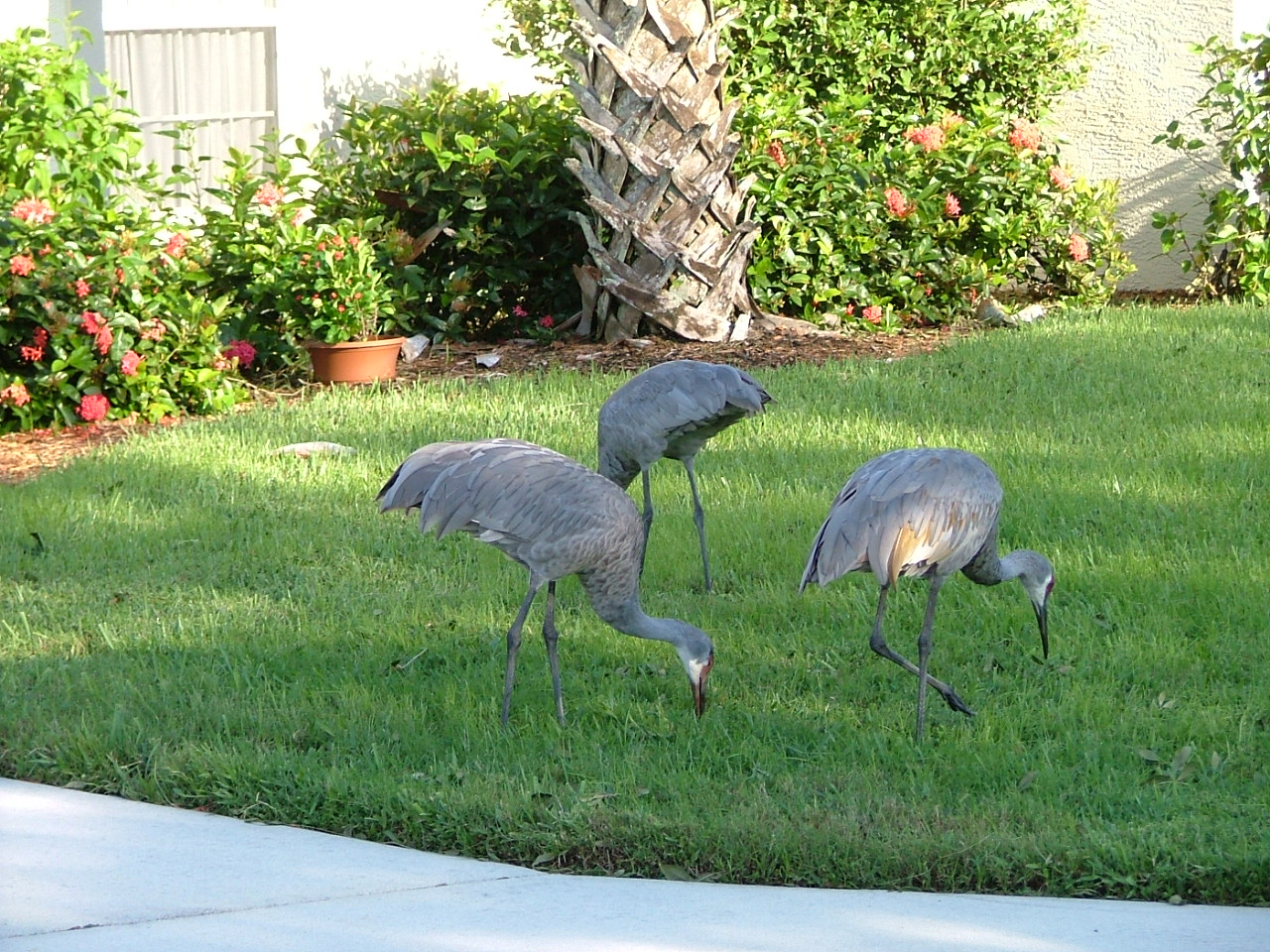
(These sandhill cranes reminded me of Indians dancing and inspired the painting below)
"Sand Crane Dreams" mixed-media; 18 x 24

Wednesday, December 12, 2012

Don’t let Juried Competition turn You into a Coward


(My fellow-artist and friend, Grace, with her watercolor entry)
Entering your work in a juried competition can be intimidating, especially if you’re a self-taught artist. Almost everything you’ve drawn or painted has come from grueling trial and error, and done while comparing yourself to artists with several degrees tacked onto their names or who may have studied abroad.

Ironically, there are many successful self-taught artists. A degree doesn’t guarantee success nor does it immediately make you an artist. In either case, the same principles hold true: practice, practice, practice.

(Third Place in Juried Competition) "With These Hands -- Love" 16 x 20 OIL on canvas
One basic difference between them is that a solid art education provides a foundation that gives the artist an edge. Knowing why a painting works and understanding the building blocks of structure and execution is half the battle. In the end, success is determined by vision, skill, and persistence.

I’ve seen many discussions online about the value of juried competition. Is it worth the money, the time, and the possibility of rejection? The consensus seems to be that it’s rarely worth the money or the 35-40% commission charged for a sale. The value seems to be in promoting the name and the skill of the artist (assuming that they get in the show), and the benefits of adding a “win” to your resume. The odds of winning are somewhat better than winning a lottery, but not much.

(2nd Place Winner -- Juried Competition) "With These Hands -- Wonder" 16 x 20 OIL on canvas
Depending on the judge or juror of the show, your artwork is subject to their particular whims, likes and dislikes, and their own education and past influences. Rejection is somewhat subjective. Even in Art Leagues, I’ve found that the preferences and styles of each artist are effected by teachers in their past.

The thing that bugs me is that if we listened to these voices and followed their suggestions or objections rigidly, we’d all start dishing out artwork in the same dull way without innovation. There would be no Van Gogh’s or Salvador Dali’s; there would be no Thomas Hart Benton’s or Picasso’s.

I love what Andy Warhol said: “Art is what you can get away with!” If we’re always worried about conforming to the rules, or doing something in a particular way, art would become static.

"Fish Market" 18 x 20 Acrylic on canvas
For an artist to stand out, to be unique and to create his or her personal style then risks must be taken; experiments must be tried, rules must be broken. Aah, you say, but first you must know all the rules before they can be broken. Agreed, but the risk is that in sticking too closely to accepted forms and norms you may never get beyond the “copy cat” stage of accepted artistic behavior.

I’m a rebel in my heart of hearts. I’ve always defied fads and fashion. I’ve always created my own style because I couldn’t afford to follow current fashion. What I discovered, even in high school, was that I could create fashion trends by wearing what I had with confidence. Soon others would be wearing something similar.

"Broken" 11 x 14 mixed media on canvas SOLD (Prints available)
The same holds true for artists. Confidently create your own personal vision and you’re bound to be successful.